
- Introduction
- What Makes Thai Green Curry Different?
- Ingredients For Thai Green Curry
- Choosing Green Curry Paste
- Coconut Milk
- Protein Options
- Vegetable Options
- Thai Eggplant
- Thai Basil
- Kaffir Lime Leaves
- Fish Sauce
- Palm Sugar
- How To Make Green Curry Mild For Children
- Step-By-Step Cooking Method
- How To Taste And Adjust The Curry
- Serving Ideas For Family Meals
- Family-Style Serving
- A Simple Family Meal Plan
- Common Beginner Mistakes
- Can Green Curry Be Made Without Fish Sauce?
- Can Green Curry Be Made Without Coconut Milk?
- Can Green Curry Be Prepared In Advance?
- Storing Leftover Green Curry
- Freezing Green Curry
- Reheating Green Curry
- Reheating Rice
- Making The Recipe More Affordable
- Making The Recipe Faster
- Conclusion
- FAQ
- What Makes Thai Green Curry Green?
- How Can I Make Green Curry Mild For Children?
- What Protein Is Best For Family Green Curry?
- Which Vegetables Work Well In Green Curry?
- Can I Use Regular Basil?
- Can I Make Green Curry Vegetarian?
- Why Is My Green Curry Too Spicy?
- Why Did My Coconut Milk Separate?
- Can Green Curry Be Frozen?
- How Should Green Curry Be Reheated?
Introduction
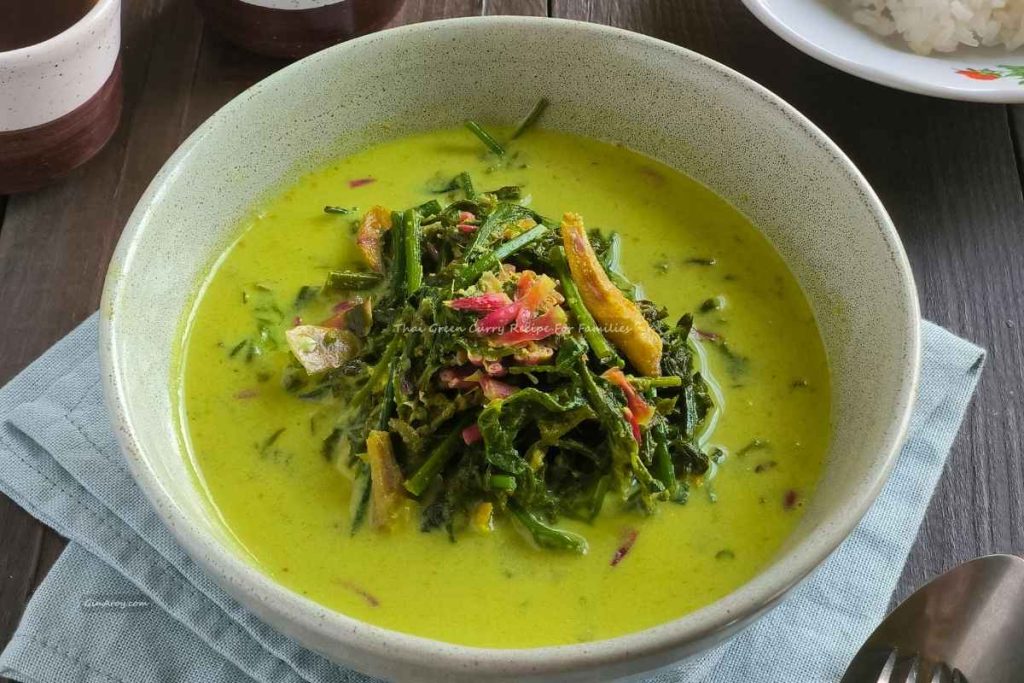
Thai green curry is one of Thailand’s most recognisable coconut-based dishes. It combines green curry paste, coconut milk, Thai basil, kaffir lime leaves, vegetables, and a choice of protein in a rich, aromatic sauce.
A traditional green curry can be spicy, but it is easy to adjust for younger children and family members who prefer gentler flavours. The key is to use less curry paste, choose a mild brand, increase the coconut milk, and serve extra chilli separately for adults.
This Thai green curry recipe for families focuses only on green curry. It includes a simple ingredient list, a mild cooking method, vegetable and protein options, family serving ideas, common beginner mistakes, and practical storage advice.
The recipe is flexible enough for chicken, tofu, prawns, fish, or vegetables. It also works well with jasmine rice, rice noodles, or a selection of mild side dishes.
👉 “Readers trying this simple curry dish may also explore a helpful introduction to Thai food for beginners for more guidance on popular flavors, ingredients, and dishes.”
What Makes Thai Green Curry Different?
Thai green curry gets its colour and aroma from green curry paste, which commonly contains green chillies, lemongrass, galangal, kaffir lime peel, garlic, shallots, coriander root, spices, and other seasonings.
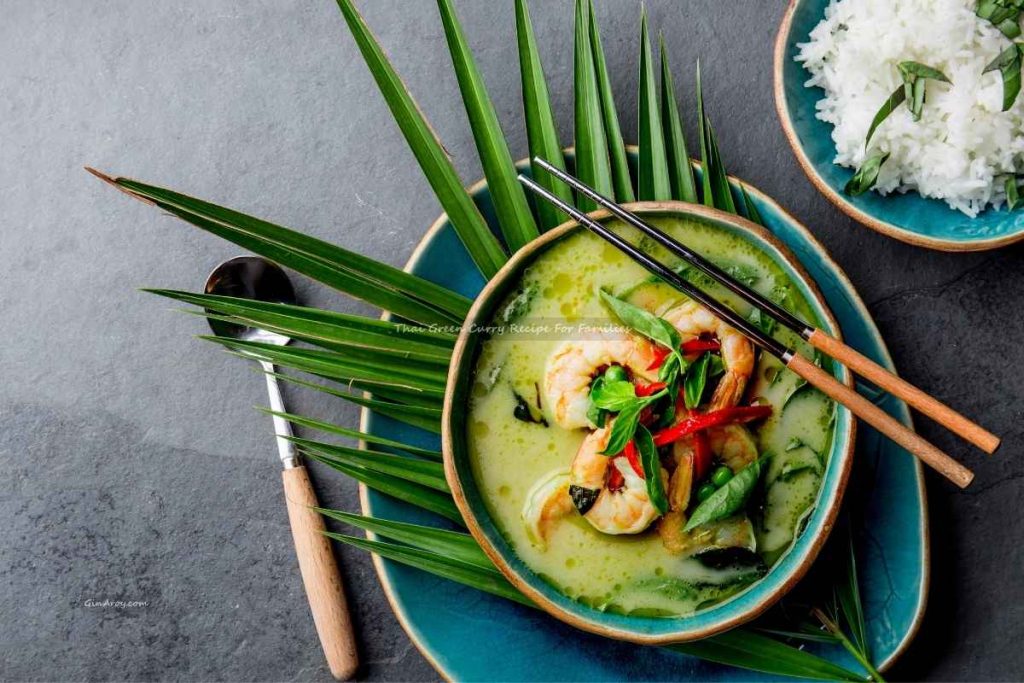
The curry is usually made with:
- Green curry paste
- Coconut milk
- Protein
- Vegetables
- Fish sauce
- Palm sugar
- Thai basil
- Kaffir lime leaves
Unlike a dry curry, Thai green curry has a smooth sauce that is usually served with rice. It should taste aromatic, creamy, salty, lightly sweet, and spicy.
A good Thai green curry recipe for families keeps these flavours balanced while reducing the chilli heat.
Ingredients For Thai Green Curry
This recipe makes approximately four family servings.
Main Ingredients
- 400 grams chicken breast or chicken thigh, sliced
- 400 millilitres coconut milk
- 1 to 2 tablespoons mild Thai green curry paste
- 1 cup chicken stock or water
- 1 tablespoon fish sauce
- 1 to 2 teaspoons palm sugar or brown sugar
- 1 cup Thai eggplant or another suitable vegetable
- 1 cup mixed vegetables
- 3 to 4 kaffir lime leaves
- 1 handful Thai basil
- 1 teaspoon neutral cooking oil if needed
- Cooked jasmine rice for serving
For a very mild Thai green curry recipe for families, begin with only one tablespoon of curry paste. More can be added later for adults.
Choosing Green Curry Paste
Green curry paste provides most of the curry’s spice and aroma.
Commercial pastes vary in:
- Chilli level
- Saltiness
- Shrimp content
- Sugar
- Oil
- Herb balance
- Concentration
Read the label before cooking, especially when preparing food for children.
Some green curry pastes contain shrimp paste or fish ingredients. Families managing seafood allergies or vegetarian diets should choose a clearly labelled suitable alternative.
For a mild Thai green curry recipe for families, select a paste described as mild or use a smaller quantity than the package recommends.
Coconut Milk
Coconut milk creates the creamy base of green curry.
A full-fat coconut milk provides a richer sauce, while a lighter product creates a thinner result.
For family cooking, coconut milk helps soften the heat of the curry paste. However, adding too much may make the curry bland.
A practical balance is:
- One can of coconut milk
- One cup of stock or water
- A small amount of curry paste
Shake the coconut milk before opening unless the recipe requires the thick cream and thinner liquid to be separated.
Protein Options
Chicken is a common choice, but this Thai green curry recipe for families can be adapted easily.
Chicken
Use thinly sliced chicken breast or thigh. Breast is leaner, while thigh usually stays softer during cooking.
Tofu
Use firm tofu and add it after the sauce begins to simmer. Pan-frying the tofu first can help it hold its shape.
Prawns
Add prawns near the end because they cook quickly. Overcooked prawns become firm and rubbery.
Fish
Choose a firm fish that will not fall apart easily. Add it gently and avoid stirring too much.
Beef
Thinly sliced beef can be used, but it may require a shorter cooking time than chicken.
Vegetable-Only Curry
Use tofu, mushrooms, pumpkin, or extra vegetables instead of meat.
The protein should support the sauce rather than overpower the other flavours.
Vegetable Options
Traditional green curry may include Thai eggplants and pea eggplants, but families can use vegetables that are easier for children to enjoy.
Suitable choices include:
- Thai eggplant
- Aubergine
- Courgette
- Pumpkin
- Green beans
- Baby corn
- Bell pepper
- Broccoli
- Carrots
- Mushrooms
- Bamboo shoots
For children, pumpkin, baby corn, carrots, and bell pepper may be easier choices because they are mild and slightly sweet.
This Thai green curry recipe for families works best with two or three vegetable types rather than too many.
Thai Eggplant
Thai eggplants are small, round, and often green or striped. They remain slightly firm when cooked and absorb the curry sauce.
Cut them into halves or quarters shortly before cooking.
If they are cut too early, they may darken. Placing them in lightly salted water can help reduce browning.
When Thai eggplants are unavailable, regular aubergine or courgette can be used.
Thai Basil
Thai basil has a sweet, slightly anise-like aroma. It is different from ordinary European basil.
Add Thai basil near the end of cooking. Long boiling weakens its fragrance and darkens the leaves.
If Thai basil is unavailable, regular basil can be used, but the flavour will be different.
Fresh basil helps the Thai green curry recipe for families smell aromatic even when the amount of curry paste is reduced.
Kaffir Lime Leaves
Kaffir lime leaves add a strong citrus fragrance.
Tear the leaves before adding them to the sauce. This helps release their aroma.
Whole leaves are normally used for flavour and moved aside while eating. If they are sliced very finely, they can be eaten.
Fresh or frozen leaves are usually more fragrant than dried ones.
Fish Sauce
Fish sauce adds saltiness and savoury depth.
Because green curry paste may already contain salt, fish sauce should be added gradually.
Start with a small amount, taste, and adjust.
For a vegetarian version, use a suitable vegetarian sauce or soy-based alternative. Check the sodium level because some alternatives are also very salty.
Palm Sugar
Palm sugar softens the saltiness and heat of the curry.
It should not make the sauce taste like a dessert.
Begin with one teaspoon and add more only when necessary.
Brown sugar can be used when palm sugar is unavailable.
The purpose of sugar in a Thai green curry recipe for families is balance, not strong sweetness.
How To Make Green Curry Mild For Children
The easiest ways to make green curry child-friendly are:
- Use less curry paste
- Choose a mild curry paste
- Add more coconut milk
- Use mild vegetables
- Avoid fresh chillies
- Serve chilli separately
- Use less fish sauce
- Add a little extra stock
- Serve with plenty of rice
Do not try to remove excess spice with sugar. Too much sugar changes the flavour without properly solving the heat.
A practical method is to cook a mild family curry first. Adults can then add sliced chillies, chilli flakes, or extra curry paste to their own bowls.
This keeps the Thai green curry recipe for families suitable for everyone.
Step-By-Step Cooking Method
Prepare The Ingredients
Slice the protein into small, even pieces.
Cut the vegetables according to how quickly they cook. Firm vegetables should be smaller than soft vegetables.
Tear the kaffir lime leaves and wash the Thai basil.
Measure the curry paste, fish sauce, sugar, coconut milk, and stock before heating the pan.
Preparing everything first makes the cooking process easier.
Heat The Coconut Milk
Add approximately one-third of the coconut milk to a deep frying pan or saucepan.
Heat it gently over medium heat.
If using a thick full-fat product, the coconut milk may begin to release a little oil. This is traditional, but it is not essential for a successful family curry.
Do not allow the coconut milk to burn.
Add The Green Curry Paste
Add one tablespoon of mild green curry paste.
Stir it into the coconut milk and cook gently until the mixture becomes aromatic.
This usually takes one or two minutes.
Avoid frying the paste at very high heat because garlic, herbs, and spices can burn.
For this Thai green curry recipe for families, it is safer to begin with less paste. You can add more later if the curry is too mild.
Add The Protein
Add the sliced chicken or chosen protein.
Stir until the pieces are coated with the curry mixture.
Cook chicken until the outside is no longer pink. It does not need to be fully cooked at this stage because it will continue cooking in the sauce.
Tofu can be added now or after the liquid, depending on its firmness.
Prawns and delicate fish should be added later.
Add The Remaining Coconut Milk
Pour in the rest of the coconut milk.
Add the stock or water and stir gently.
Bring the sauce to a light simmer rather than a strong boil.
A gentle simmer keeps the sauce smoother and helps the protein remain tender.
Add Firm Vegetables
Add vegetables that need more cooking time, such as:
- Carrots
- Pumpkin
- Thai eggplant
- Green beans
Simmer until they begin to soften.
Do not cook them completely before adding softer vegetables.
Add Softer Vegetables
Add vegetables such as:
- Bell pepper
- Courgette
- Mushrooms
- Baby corn
- Broccoli
Continue simmering until all vegetables are cooked but still have some texture.
A family curry is usually more appealing when the vegetables are soft enough for children but not completely mushy.
Season The Curry
Add:
- Fish sauce
- Palm sugar
- Torn kaffir lime leaves
Stir and taste.
The sauce should be creamy, aromatic, mildly salty, lightly sweet, and gently spicy.
If it is too strong, add a little more coconut milk or stock.
If it is too mild, adults can add more curry paste to a separate portion.
Add Prawns Or Fish
When using prawns or fish, add them now.
Cook only until safely done.
Prawns should become firm and opaque. Fish should separate easily but should not fall apart in the sauce.
Add Thai Basil
Turn down the heat and add the Thai basil.
Stir just until the leaves wilt.
Remove the curry from the heat and allow it to stand briefly before serving.
The finished Thai green curry recipe for families should have a fragrant sauce and tender ingredients without an oily or excessively thick texture.
How To Taste And Adjust The Curry
Before serving, ask:
- Is it too spicy?
- Is it too salty?
- Is it too thick?
- Is it too sweet?
- Can you smell the basil and lime leaves?
- Are the vegetables properly cooked?
Possible adjustments include:
- More coconut milk for excessive heat
- More stock for a thick sauce
- A small amount of fish sauce for more saltiness
- A small amount of sugar if the flavour is too sharp
- More Thai basil for fragrance
- More curry paste in an adult-only portion
Make adjustments gradually. Large additions are difficult to reverse.
Serving Ideas For Family Meals
Jasmine rice is the most common accompaniment.
Other serving options include:
- Brown rice
- Rice noodles
- Roti
- Steamed vegetables
- Cucumber slices
- Thai omelette
- Mild stir-fried vegetables
- Fresh fruit
For younger children, place the rice and curry separately. This allows them to control how much sauce touches the rice.
A small bowl of plain rice can also help if the curry feels warmer than expected.
The Thai green curry recipe for families can be served as the main dish with one or two mild sides.
Family-Style Serving
Place the curry in a serving bowl and allow each family member to choose their preferred amount.
Serve separately:
- Jasmine rice
- Extra Thai basil
- Sliced chilli for adults
- Lime wedges
- Cucumber
- Mild vegetables
Avoid mixing extra chilli into the whole curry.
Family-style serving makes one mild curry suitable for children while still allowing adults to increase the spice.
A Simple Family Meal Plan
A balanced green curry meal could include:
- Mild green curry with chicken or tofu
- Steamed jasmine rice
- Cucumber slices
- Stir-fried vegetables
- Fresh watermelon or pineapple
- Water or an unsweetened drink
This keeps the meal focused on green curry without adding several rich or spicy dishes.
Common Beginner Mistakes
Using Too Much Curry Paste
Green curry paste can be very spicy. Begin with less and add more later.
Boiling Coconut Milk Too Aggressively
A strong boil may cause the sauce to separate or become oily. Use a gentle simmer.
Adding Every Ingredient At The Same Time
Different vegetables and proteins need different cooking times.
Overcooking Chicken
Thin chicken slices cook quickly. Long cooking can make them dry.
Overcooking Prawns
Prawns should be added near the end.
Making The Curry Too Sweet
Sugar should balance the sauce rather than dominate it.
Adding Too Much Fish Sauce
The curry paste may already be salty. Always taste before adding more.
Adding Thai Basil Too Early
Basil loses its aroma and colour when boiled for too long.
Serving Large Herb Pieces To Children
Whole kaffir lime leaves should be moved aside. Check the bowl before serving young children.
Expecting The Sauce To Be Extremely Thick
Thai green curry sauce is usually pourable and is intended to mix with rice.
Avoiding these mistakes makes the Thai green curry recipe for families much easier to prepare successfully.
Can Green Curry Be Made Without Fish Sauce?
Yes.
Use:
- Vegetarian seasoning sauce
- Light soy sauce
- Mushroom seasoning
- A small amount of salt
The flavour will be different, but the curry can still be aromatic and satisfying.
Also check the green curry paste because some brands contain shrimp paste or fish.
Can Green Curry Be Made Without Coconut Milk?
Coconut milk is one of the main ingredients that defines Thai green curry.
Replacing it completely will create a different style of curry.
For a lighter version, use:
- Half coconut milk
- Half low-sodium stock
This reduces richness while keeping the familiar flavour.
Can Green Curry Be Prepared In Advance?
Yes. Green curry often tastes even more developed after resting.
Prepare it earlier in the day or one day before serving.
However, Thai basil may darken during storage. For the freshest aroma, add some basil during cooking and a small fresh handful after reheating.
Delicate seafood is usually best added close to serving.
Storing Leftover Green Curry
Allow the curry to cool promptly.
Transfer it to a clean covered container and refrigerate.
Keep rice in a separate container.
Use leftovers within a short period and discard the curry if it develops an unusual smell, texture, or appearance.
Do not leave coconut-based curry at room temperature for extended periods.
Freezing Green Curry
Green curry can be frozen, although some vegetables may soften after thawing.
Chicken, tofu, sauce, pumpkin, and mushrooms generally freeze more successfully than delicate vegetables.
For best results:
- Cool the curry first
- Divide it into family-sized portions
- Use airtight containers
- Label the date
- Freeze rice separately
- Thaw safely in the refrigerator
Fresh Thai basil should be added after reheating rather than frozen in large amounts.
Reheating Green Curry
Reheat the curry gently in a saucepan over medium-low heat.
Stir occasionally and add a small amount of water, stock, or coconut milk if the sauce has thickened.
Heat until the protein and sauce are hot throughout.
Avoid repeatedly reheating the same container.
A microwave can also be used, but stir halfway through so the heat is distributed evenly.
Add fresh basil after reheating to restore some aroma.
Reheating Rice
Refrigerated rice should be stored and reheated carefully.
Reheat only the portion needed and make sure it becomes hot throughout.
Do not repeatedly cool and reheat rice.
When in doubt about rice that has been left out too long, discard it rather than taking a risk.
Making The Recipe More Affordable
Green curry can be adjusted to suit a family budget.
Cost-saving ideas include:
- Use chicken thigh instead of prawns
- Use seasonal vegetables
- Add tofu
- Use more mushrooms
- Buy frozen kaffir lime leaves
- Freeze leftover curry paste
- Serve with rice
- Use one protein rather than several
A small amount of curry paste and one can of coconut milk can produce several servings when combined with vegetables and rice.
Making The Recipe Faster
For a quicker family meal:
- Use a commercial mild curry paste
- Buy pre-sliced chicken
- Use frozen vegetables
- Prepare rice in a rice cooker
- Use frozen kaffir lime leaves
- Wash and cut vegetables earlier
- Use one-pan cooking
The curry can often be prepared while the rice cooks.
👉 “For more dinner ideas, explore these Thai curry recipes for family meals.”
Conclusion
This Thai green curry recipe for families offers a simple way to enjoy one of Thailand’s most famous curries without making the meal too spicy for children.
The basic ingredients are green curry paste, coconut milk, protein, vegetables, fish sauce, palm sugar, Thai basil, and kaffir lime leaves. The curry can be made with chicken, tofu, prawns, fish, beef, or vegetables.
To keep it mild, begin with less curry paste, use more coconut milk, avoid fresh chillies, and serve spicy toppings separately for adults. Mild vegetables such as pumpkin, baby corn, carrots, and bell pepper can also make the dish more appealing to children.
Follow the cooking order carefully. Fry the curry paste gently, add the protein, pour in the coconut milk, cook firm vegetables before soft vegetables, season gradually, and add Thai basil near the end.
Serve the Thai green curry recipe for families with jasmine rice, cucumber, mild vegetables, and fresh fruit. Store leftovers promptly, refrigerate the curry and rice separately, and reheat only the portion needed.
With a mild curry paste and a few simple adjustments, Thai green curry can become a practical, aromatic, and enjoyable family meal.
FAQ
What Makes Thai Green Curry Green?
Its colour comes mainly from green chillies and fresh herbs used in the curry paste. The exact shade varies between homemade and commercial pastes.
How Can I Make Green Curry Mild For Children?
Use less curry paste, choose a mild paste, add more coconut milk, avoid extra chilli, and serve spicy toppings separately.
What Protein Is Best For Family Green Curry?
Chicken is the easiest option. Tofu, prawns, firm fish, beef, and vegetable-only versions also work.
Which Vegetables Work Well In Green Curry?
Thai eggplant, pumpkin, baby corn, green beans, courgette, bell pepper, mushrooms, carrots, broccoli, and bamboo shoots are suitable.
Can I Use Regular Basil?
Yes, but the flavour will differ. Thai basil has a stronger, slightly anise-like aroma.
Can I Make Green Curry Vegetarian?
Yes. Use tofu, mushrooms, vegetables, vegetarian seasoning, and a green curry paste without shrimp paste or fish ingredients.
Why Is My Green Curry Too Spicy?
The curry paste may be stronger than expected. Add more coconut milk or stock and serve the curry with extra rice.
Why Did My Coconut Milk Separate?
The curry may have boiled too strongly. Use medium or low heat and maintain a gentle simmer.
Can Green Curry Be Frozen?
Yes. The sauce and protein usually freeze well, although some vegetables may become softer after thawing.
How Should Green Curry Be Reheated?
Warm it gently in a saucepan, stir regularly, and add a small amount of water, stock, or coconut milk if the sauce becomes too thick.