- Introduction
- Why Sauces Matter In Thai Stir-Fries
- Oyster Sauce
- Fish Sauce
- Light Soy Sauce
- Dark Soy Sauce
- Sweet Soy Sauce
- Golden Mountain Seasoning Sauce
- Thai Chilli Paste
- Tamarind Sauce
- Soybean Paste
- Sriracha And Fresh Chilli Sauces
- Pad Kra Pao Sauce
- Pad See Ew Sauce
- Sauce For Stir-Fried Vegetables
- Sauce For Chicken, Pork, And Beef
- Sauce For Seafood
- Sauce For Tofu And Plant-Based Stir-Fries
- How To Balance Thai Stir Fry Sauces
- Tips For Better Stir-Frying At Home
- Common Mistakes To Avoid
- How To Store Thai Cooking Sauces
- A Simple Starter Collection
- Conclusion
- FAQ
- What Are The Most Important Thai Stir Fry Sauces?
- Can I Use Only Oyster Sauce In A Stir-Fry?
- What Is The Difference Between Light And Dark Soy Sauce?
- Which Sauce Is Best For Pad Kra Pao?
- Which Sauce Is Best For Stir-Fried Vegetables?
- Can Thai Stir Fry Sauces Be Vegetarian?
- How Do I Stop A Stir-Fry From Becoming Too Salty?
- Should I Mix The Sauce Before Cooking?
- How Long Can Opened Thai Sauces Be Stored?
Introduction
Thai stir-fries are popular because they are quick, flexible, and full of flavour. A simple combination of vegetables, protein, herbs, and rice can become a complete meal in only a short time. The key is understanding how different Thai stir fry sauces work together.
Some sauces add saltiness, while others bring sweetness, colour, spice, or a deeper savoury taste. Thai cooks often combine two or more sauces rather than relying on a single bottle. Learning these basic combinations can make home cooking easier and help your food taste more balanced.
You do not need a large collection of ingredients to begin. A few reliable Thai stir fry sauces, fresh garlic, chilli, vegetables, and your preferred protein can be enough to prepare many familiar Thai dishes.
This guide explains the most useful sauces, how they taste, which ingredients they suit, and how to combine them for simple home cooking.
👉 “Readers planning meals with children may also enjoy these Family-Friendly Thai Meals To Try In Bangkok for more approachable dishes to try together.”
Why Sauces Matter In Thai Stir-Fries
A good Thai stir-fry usually balances several flavours. Saltiness may come from fish sauce or soy sauce, sweetness from sugar or sweet soy sauce, and richness from oyster sauce. Chilli, garlic, lime, tamarind, and herbs can then add freshness or heat.
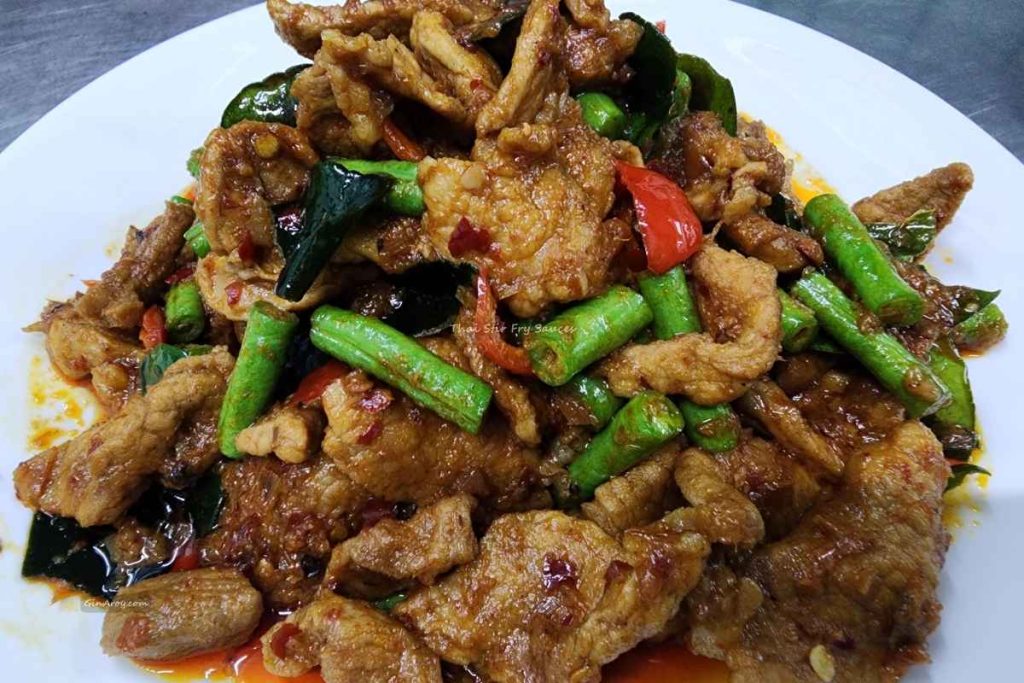
The best Thai stir fry sauces should support the main ingredients rather than cover them completely. A vegetable stir-fry may need only a light sauce, while beef, pork, or noodles may work better with a richer combination.
Sauces also help with:
- Seasoning the ingredients evenly
- Adding moisture to the wok
- Creating colour
- Improving aroma
- Balancing sweet and salty flavours
- Giving vegetables a glossy finish
- Helping meat and tofu absorb flavour
- Connecting all the ingredients in the dish
Because bottled sauces vary by brand, it is better to begin with a small amount. You can always add more after tasting.
Oyster Sauce
Oyster sauce is one of the most useful Thai stir fry sauces for home cooking. It has a thick texture and a savoury, slightly sweet flavour that works well with vegetables, meat, seafood, mushrooms, and tofu.
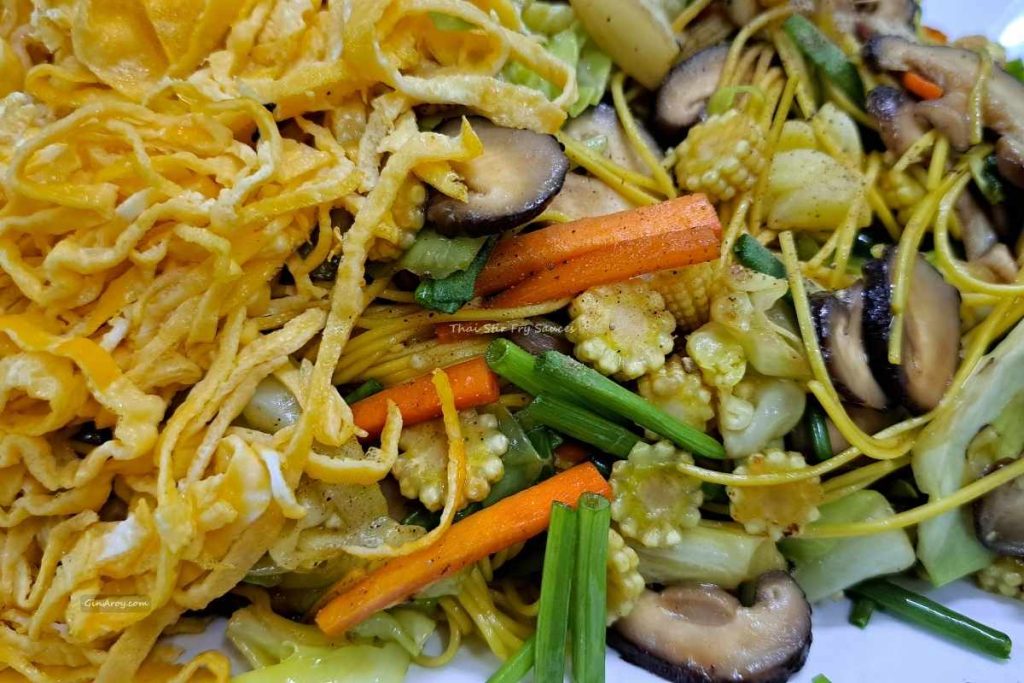
It is commonly used in dishes such as:
- Stir-fried broccoli
- Chicken with vegetables
- Beef with oyster sauce
- Stir-fried mushrooms
- Kale with crispy pork
- Mixed vegetables
- Tofu stir-fry
- Noodles with meat and vegetables
Oyster sauce is usually not used alone. It is often mixed with light soy sauce, fish sauce, sugar, or a small amount of water.
A simple combination may include:
- One tablespoon oyster sauce
- One teaspoon light soy sauce
- A small pinch of sugar
- One or two tablespoons water
This creates a mild all-purpose sauce for vegetables, chicken, pork, or tofu.
Vegetarian oyster-style sauces are also available. These are often made with mushrooms and can be useful for plant-based cooking.
Fish Sauce
Fish sauce is one of the most important ingredients in Thai cuisine. It has a strong aroma when used directly from the bottle, but it becomes more balanced when cooked with garlic, chilli, meat, vegetables, and other seasonings.
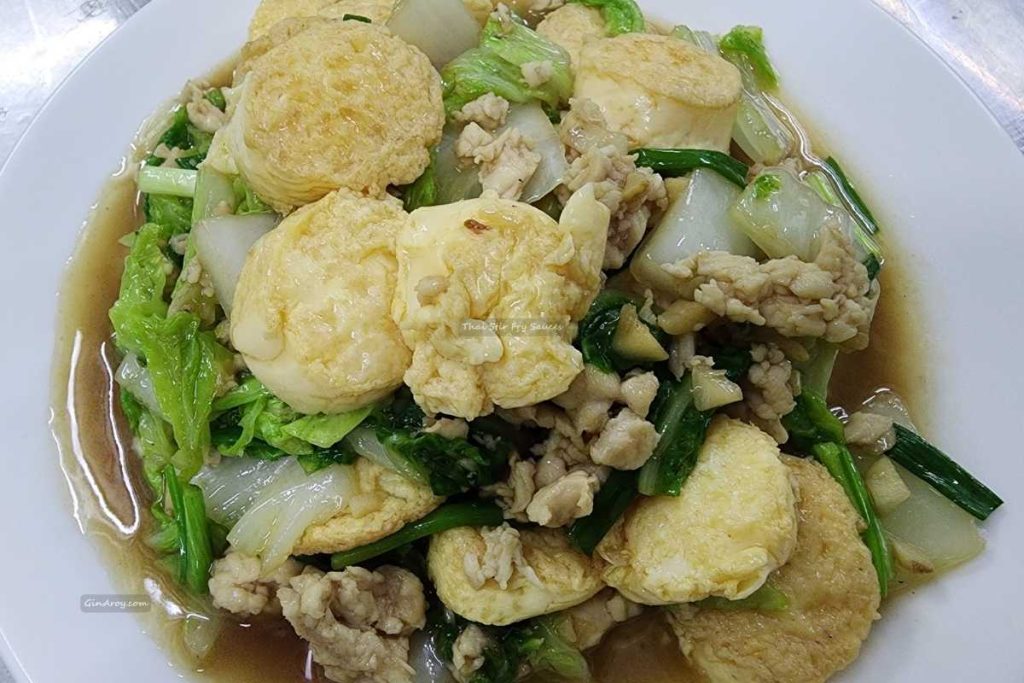
Among common Thai stir fry sauces, fish sauce is especially useful when you want a clear, salty flavour without adding much colour or thickness.
It works well in:
- Pad kra pao
- Stir-fried chicken
- Stir-fried pork
- Seafood dishes
- Fried rice
- Egg dishes
- Chilli and basil stir-fries
- Simple vegetable dishes
Fish sauce can be quite salty, so add it gradually. It is often balanced with a small amount of sugar.
A basic combination for a basil stir-fry may include:
- One tablespoon oyster sauce
- One or two teaspoons fish sauce
- A small amount of light soy sauce
- A pinch of sugar
- Water as needed
The final amount depends on the quantity of meat or vegetables and the saltiness of the sauces.
Light Soy Sauce
Light soy sauce is thinner and saltier than dark soy sauce. It is one of the easiest Thai stir fry sauces to use because it works with almost every type of protein and vegetable.
It adds seasoning without making the dish very dark. Light soy sauce is suitable for:
- Chicken and vegetable stir-fries
- Tofu dishes
- Fried rice
- Stir-fried noodles
- Egg dishes
- Mushrooms
- Seafood
- Mixed vegetables
Light soy sauce is often combined with oyster sauce. The oyster sauce adds body and sweetness, while light soy sauce provides a clearer salty flavour.
For an easy everyday stir-fry, try combining:
- One tablespoon oyster sauce
- One teaspoon light soy sauce
- One teaspoon fish sauce
- A pinch of sugar
- Two tablespoons water
This mixture can be adjusted depending on your taste and the quantity of food.
Dark Soy Sauce
Dark soy sauce is thicker, darker, and usually less sharply salty than light soy sauce. Its main purpose is often colour rather than seasoning.
Only a small amount is normally needed. Too much can make a dish look very dark and may overpower the other ingredients.
Dark soy sauce works particularly well in:
- Pad see ew
- Stir-fried wide rice noodles
- Beef stir-fries
- Pork dishes
- Fried rice
- Braised-style stir-fries
- Sweet and savoury noodle dishes
When comparing Thai stir fry sauces, dark soy sauce is best treated as a supporting ingredient. It is usually mixed with light soy sauce, oyster sauce, or fish sauce rather than used as the main seasoning.
Start with around half a teaspoon and add more only if needed.
Sweet Soy Sauce
Sweet soy sauce has a thick consistency and a noticeable sweetness. It is useful in noodle dishes and recipes that need both colour and a gentle caramel-like flavour.
It can be used in:
- Pad see ew
- Stir-fried noodles
- Fried rice
- Chicken dishes
- Pork stir-fries
- Tofu dishes
- Vegetable noodles
Sweet soy sauce is one of the easiest Thai stir fry sauces to overuse because its flavour can quickly dominate a dish. Begin with a small quantity and balance it with light soy sauce or fish sauce.
It can also help create a darker, glossy finish without adding as much sharp saltiness as light soy sauce.
Golden Mountain Seasoning Sauce
Golden Mountain sauce is a popular Thai seasoning sauce with a savoury, slightly salty flavour. It is often compared with soy-based seasoning sauces, but it has its own distinctive taste.
It is commonly used in:
- Fried rice
- Vegetable stir-fries
- Chicken dishes
- Pork dishes
- Eggs
- Noodles
- Tofu
- Mushroom stir-fries
Golden Mountain sauce can replace part of the light soy sauce in many recipes. It is one of the most versatile Thai stir fry sauces for people who regularly cook Thai food at home.
A simple combination may include:
- One tablespoon oyster sauce
- One teaspoon Golden Mountain sauce
- A small amount of fish sauce
- A pinch of sugar
- Water as needed
This works particularly well with chicken, pork, vegetables, and mushrooms.
Thai Chilli Paste
Thai chilli paste, often called nam prik pao, has a sweet, spicy, smoky, and savoury flavour. It can contain chilli, garlic, shallots, sugar, oil, and other seasonings.
It adds more than heat. Thai chilli paste can also provide richness, colour, and a roasted aroma.
It is useful in:
- Stir-fried seafood
- Chicken with chilli paste
- Cashew chicken
- Stir-fried clams
- Noodle dishes
- Vegetable stir-fries
- Fried rice
- Tofu dishes
Thai chilli paste is thicker than many other Thai stir fry sauces, so it may need to be mixed with water, stock, fish sauce, or oyster sauce before being added to the wok.
For a simple chilli-paste stir-fry, combine:
- One tablespoon Thai chilli paste
- One tablespoon oyster sauce
- One teaspoon fish sauce
- A small amount of sugar if needed
- Two tablespoons water
Taste the chilli paste first because sweetness and heat vary between brands.
Tamarind Sauce
Tamarind adds sourness and a mild fruity depth. It is best known as part of pad Thai sauce, but it can also be used in other stir-fried dishes.
Tamarind works well with:
- Rice noodles
- Shrimp
- Chicken
- Tofu
- Eggs
- Bean sprouts
- Peanuts
- Sweet and sour stir-fries
Tamarind is different from the salty Thai stir fry sauces used for everyday vegetable and meat dishes. It usually needs to be balanced with sugar and fish sauce.
A simple pad Thai-style sauce may contain:
- Tamarind paste
- Palm sugar
- Fish sauce
- A small amount of water
The exact balance depends on the strength of the tamarind. Some products are concentrated, while others are already diluted.
Add the sauce gradually and taste before using more.
Soybean Paste
Thai soybean paste has a salty, fermented flavour. It can add depth to vegetables, fish, noodles, and some traditional stir-fries.
It is commonly used with:
- Chinese broccoli
- Morning glory
- Ginger
- Fish
- Seafood
- Tofu
- Noodles
- Mixed vegetables
Soybean paste has a stronger and more distinctive taste than light soy sauce. It can be mixed with sugar, chilli, garlic, and a little water.
Among traditional Thai stir fry sauces, soybean paste is especially useful for cooks who want to explore flavours beyond oyster sauce and fish sauce.
Use it sparingly until you become familiar with its saltiness.
Sriracha And Fresh Chilli Sauces
Sriracha can add chilli heat, acidity, sweetness, and garlic flavour. It is not the main seasoning in most traditional Thai stir-fries, but it can be useful for quick home cooking.
It works well in:
- Chicken stir-fries
- Tofu dishes
- Noodles
- Fried rice
- Seafood
- Mixed vegetables
Sriracha is best combined with other Thai stir fry sauces rather than used as the only sauce.
For a quick spicy mixture, combine:
- One tablespoon oyster sauce
- One teaspoon light soy sauce
- One or two teaspoons sriracha
- A pinch of sugar
- A small amount of water
Fresh chopped Thai chilli can also be used instead. Fresh chilli adds cleaner heat, while chilli paste or sriracha adds more sweetness and body.
Pad Kra Pao Sauce
Pad kra pao is a popular Thai stir-fry made with holy basil, garlic, chilli, and a choice of minced or sliced protein.
There is no single fixed recipe, but the sauce often includes a combination of:
- Oyster sauce
- Fish sauce
- Light soy sauce
- Dark soy sauce
- Sugar
- Water
The most important flavours should still come from the garlic, chilli, and holy basil. The sauce should season the meat without creating too much liquid.
A basic mixture for two portions may include:
- One tablespoon oyster sauce
- One teaspoon fish sauce
- One teaspoon light soy sauce
- A small pinch of sugar
- One or two tablespoons water
- A small amount of dark soy sauce if colour is needed
This is one of the most practical combinations of Thai stir fry sauces for chicken, pork, beef, tofu, or mushrooms.
Pad See Ew Sauce
Pad see ew is made with wide rice noodles, egg, Chinese broccoli, and a protein such as chicken, pork, beef, shrimp, or tofu.
The sauce normally combines:
- Light soy sauce
- Dark soy sauce
- Oyster sauce
- Sweet soy sauce
- Sugar
The dark and sweet sauces create the familiar colour, while light soy sauce and oyster sauce provide seasoning.
Avoid adding too much liquid because fresh rice noodles can become soft and break apart. Prepare the sauce before heating the wok so that it can be added quickly.
A well-balanced pad see ew sauce should taste savoury and slightly sweet without becoming overly salty.
Sauce For Stir-Fried Vegetables
Vegetables usually need a lighter sauce than meat or noodles. The goal is to keep their natural flavour, texture, and colour.
A basic vegetable sauce may contain:
- One tablespoon oyster sauce
- One teaspoon light soy sauce
- A small pinch of sugar
- Two tablespoons water
- A little white pepper
This works well with:
- Broccoli
- Carrots
- Baby corn
- Mushrooms
- Cabbage
- Green beans
- Cauliflower
- Bok choy
For vegetarian cooking, replace oyster sauce with mushroom-based vegetarian sauce and use soy sauce instead of fish sauce.
Simple Thai stir fry sauces are often better for vegetables because heavy seasoning can hide their freshness.
Sauce For Chicken, Pork, And Beef
Chicken, pork, and beef can handle richer sauce combinations. Oyster sauce is usually a good base, while fish sauce or soy sauce adds saltiness.
An everyday meat sauce may include:
- One and a half tablespoons oyster sauce
- One teaspoon fish sauce
- One teaspoon light soy sauce
- Half a teaspoon sugar
- Two tablespoons water
For beef, a small amount of dark soy sauce can add colour. For pork, garlic and white pepper work well. Chicken is flexible and can be combined with chilli paste, cashews, basil, ginger, or vegetables.
Marinating the meat briefly with a little soy sauce can add flavour, but avoid using too much sauce before cooking because it may release excess liquid into the wok.
Sauce For Seafood
Seafood often cooks quickly and needs a sauce that does not overpower its natural flavour.
Useful ingredients include:
- Fish sauce
- Oyster sauce
- Light soy sauce
- Thai chilli paste
- Garlic
- Fresh chilli
- Lime
- Basil
A simple seafood sauce can combine oyster sauce, fish sauce, chilli paste, and water. Add lime juice after cooking if you want freshness, since prolonged heat can weaken its flavour.
Shrimp, squid, clams, and fish all work well with carefully balanced Thai stir fry sauces. Cook seafood only until ready, as overcooking can make it tough.
Sauce For Tofu And Plant-Based Stir-Fries
Tofu absorbs flavour well, making it suitable for many Thai-style sauces.
For plant-based cooking, use:
- Light soy sauce
- Dark soy sauce
- Vegetarian mushroom sauce
- Sweet soy sauce
- Chilli paste without seafood ingredients
- Tamarind
- Sugar
- Garlic
- Fresh chilli
Check labels carefully because some bottled Thai stir fry sauces may contain fish, shellfish, or other animal ingredients.
For better texture, fry or bake tofu before adding it to the stir-fry. This helps it hold its shape and absorb the sauce without becoming too soft.
Mushrooms can also add a rich savoury flavour to vegetarian dishes.
How To Balance Thai Stir Fry Sauces
A useful sauce should balance the main flavour elements without becoming too salty, sweet, or heavy.
Start by thinking about the role of each ingredient:
- Oyster sauce adds richness and mild sweetness
- Fish sauce adds strong savoury saltiness
- Light soy sauce adds clean seasoning
- Dark soy sauce adds colour
- Sweet soy sauce adds colour and sweetness
- Chilli paste adds heat, sweetness, and roasted flavour
- Tamarind adds sourness
- Sugar softens saltiness and acidity
- Water prevents the sauce from becoming too concentrated
Mix your Thai stir fry sauces in a small bowl before cooking. This allows you to taste and adjust the mixture before it reaches the hot wok.
Remember that the sauce will become stronger as water evaporates.
Tips For Better Stir-Frying At Home
Good sauce is important, but cooking technique also affects the result.
Helpful tips include:
- Prepare all ingredients before heating the wok
- Cut ingredients into similar sizes
- Use a large wok or frying pan
- Avoid overcrowding the pan
- Cook meat in batches when necessary
- Add garlic and chilli carefully so they do not burn
- Add harder vegetables before softer vegetables
- Keep sauces ready in a small bowl
- Stir quickly over medium-high or high heat
- Add fresh herbs near the end
- Taste before adding more salt
- Serve the stir-fry immediately
If the pan is overcrowded, the ingredients may steam instead of fry. This can create too much liquid and dilute the sauce.
Common Mistakes To Avoid
One common mistake is adding too many salty ingredients at once. Fish sauce, soy sauce, oyster sauce, and seasoning sauce all contain salt.
Other mistakes include:
- Using too much dark soy sauce
- Adding sauce without tasting it
- Pouring sauce directly from the bottle
- Using too much sugar
- Adding too much water
- Burning garlic or chilli
- Overcooking vegetables
- Overcooking seafood
- Adding fresh basil too early
- Cooking too many ingredients at once
- Using the same sauce ratio for every dish
The best Thai stir fry sauces are adjusted according to the ingredients, portion size, and personal taste.
How To Store Thai Cooking Sauces
Most unopened sauces can be kept in a cool, dry cupboard. After opening, follow the storage instructions on the label.
Some sauces may be refrigerated after opening, particularly in hot climates. Always use clean utensils and keep bottle caps free from food residue.
Check sauces for:
- Changes in smell
- Unusual colour
- Mould
- Damaged packaging
- Expired dates
- Unexpected changes in texture
Organising your sauces in one area makes home cooking faster. Keeping oyster sauce, fish sauce, light soy sauce, and dark soy sauce together gives you a useful basic Thai pantry.
A Simple Starter Collection
You do not need every sauce mentioned in this guide. Beginners can start with four or five essential ingredients.
A practical starter collection includes:
- Oyster sauce
- Fish sauce
- Light soy sauce
- Dark soy sauce
- Thai chilli paste
With these basic Thai stir fry sauces, you can prepare vegetable stir-fries, basil dishes, fried rice, noodles, chicken, pork, beef, tofu, and seafood.
You can later add sweet soy sauce, Golden Mountain sauce, tamarind paste, or soybean paste as you explore more recipes.
👉 “Home cooks exploring Thai stir-fry sauces may also enjoy these Simple Thai Coconut Soup Recipes for another comforting Thai dish to prepare at home.”
Conclusion
The best Thai stir fry sauces make home cooking quicker, easier, and more enjoyable. Oyster sauce provides richness, fish sauce adds savoury saltiness, light soy sauce seasons the dish, and dark soy sauce adds colour. Sweet soy sauce, chilli paste, tamarind, and soybean paste can create more specialised flavours.
You do not need to use every sauce in every recipe. Begin with a simple combination, taste carefully, and adjust it according to the vegetables, meat, seafood, tofu, rice, or noodles you are cooking.
Once you understand how the basic Thai stir fry sauces work together, you can prepare many different Thai meals without following an exact recipe every time. A well-stocked pantry, fresh ingredients, and a hot wok are often all you need for satisfying Thai home cooking.
FAQ
What Are The Most Important Thai Stir Fry Sauces?
The most useful sauces are oyster sauce, fish sauce, light soy sauce, and dark soy sauce. These four ingredients can be combined in different ways for vegetables, meat, seafood, rice, and noodles.
Can I Use Only Oyster Sauce In A Stir-Fry?
You can, but the flavour may be richer and sweeter than expected. Oyster sauce usually tastes more balanced when combined with light soy sauce, fish sauce, or water.
What Is The Difference Between Light And Dark Soy Sauce?
Light soy sauce mainly adds saltiness and seasoning. Dark soy sauce is thicker and is generally used in smaller amounts to add colour and a deeper flavour.
Which Sauce Is Best For Pad Kra Pao?
Pad kra pao commonly uses a combination of oyster sauce, fish sauce, light soy sauce, sugar, and a little water. Garlic, chilli, and holy basil provide the dish’s main aroma.
Which Sauce Is Best For Stir-Fried Vegetables?
A light mixture of oyster sauce, light soy sauce, sugar, and water works well. Vegetarian mushroom sauce can replace oyster sauce for a plant-based dish.
Can Thai Stir Fry Sauces Be Vegetarian?
Some can, but labels should be checked carefully. Fish sauce and traditional oyster sauce are not vegetarian. Use soy sauce, mushroom-based vegetarian sauce, tamarind, and suitable chilli paste instead.
How Do I Stop A Stir-Fry From Becoming Too Salty?
Begin with small amounts of sauce and taste before adding more. Remember that fish sauce, soy sauce, oyster sauce, and seasoning sauce all contain salt.
Should I Mix The Sauce Before Cooking?
Yes. Mixing the sauce in a small bowl helps you control the flavour and add it quickly once the wok is hot.
How Long Can Opened Thai Sauces Be Stored?
Storage times vary by product and brand. Follow the instructions on the bottle, keep the cap clean, and refrigerate the sauce when the label recommends it.