

- Introduction
- What Makes A Thai Vegetable Soup Different?
- Essential Ingredients For Thai Vegetable Broth
- How To Make Vegetable Broth Taste Thai
- Coriander Root, Garlic, And White Pepper
- Lemongrass, Galangal, And Kaffir Lime Leaves
- Vegetables Commonly Used In Thai Soups
- Chinese Cabbage
- Bok Choy
- Winter Melon
- Daikon Radish
- Morning Glory
- Mushrooms
- Pumpkin
- Tomatoes
- Vegetarian Protein Options
- Firm Tofu
- Soft Tofu
- Tempeh
- Beans And Lentils
- Mild Thai Vegetable Soup For Families
- How To Make Soup Mild For Children
- Clear Thai Vegetable And Tofu Soup
- Aromatic Thai Mushroom Soup
- Winter Melon And Tofu Soup
- Pumpkin And Vegetable Clear Soup
- Using Seasonal Vegetables
- How To Substitute Leafy Vegetables
- How To Substitute Root Vegetables
- Adding Noodles
- Seasoning Without Fish Sauce
- How To Add Sourness
- How To Add Heat
- How To Avoid A Bland Vegetable Soup
- Common Beginner Mistakes
- Serving Ideas For Family Meals
- Preparing Soup In Advance
- Storing Leftover Vegetable Soup
- Freezing Thai Vegetable Soup
- Reheating Vegetable Soup
- Reheating Soup With Tofu
- A Simple Weekly Soup Plan
- Conclusion
- FAQ
- What Vegetables Are Commonly Used In Thai Vegetable Soup?
- How Can I Make Vegetable Broth Taste Thai?
- Can Thai Vegetable Soup Be Mild?
- What Vegetarian Protein Can I Add?
- Do Thai Vegetable Soups Need Coconut Milk?
- Can I Use Seasonal Vegetables?
- Can I Add Noodles?
- How Can I Make The Soup Less Salty?
- Can Thai Vegetable Soup Be Frozen?
- How Should Vegetable Soup Be Reheated?
Introduction
Thai soups do not always need coconut milk, seafood, or rich curry paste. Many everyday dishes are based on light broth, fresh vegetables, aromatic roots, herbs, mushrooms, tofu, and simple seasoning.
These Thai vegetable soup recipes focus entirely on vegetable-led soups. They are suitable for home cooks who want clear broths, mild family meals, flexible ingredients, and practical ways to use seasonal produce.
The recipes do not attempt to cover every famous Thai soup. They also avoid coconut-heavy preparations that belong in a separate guide to coconut soups. Instead, the focus remains on vegetables, vegetarian protein, clear broth, gentle aromatics, and balanced Thai flavour.
A good Thai vegetable soup can be light but satisfying. Coriander root, garlic, white pepper, lemongrass, galangal, kaffir lime leaves, soy sauce, lime, mushrooms, and fresh herbs can all create depth without relying on meat stock.
This guide explains how to build flavourful vegetable broth, which vegetables work well, how to make soup mild for children, how to add vegetarian protein, and how to store and reheat leftovers safely.
👉 “Families looking for more approachable food ideas may also explore these family-friendly Thai meals to enjoy in Bangkok for additional dishes that children and adults can try together.”
What Makes A Thai Vegetable Soup Different?
Thai vegetable soups often combine a light broth with fresh aromatics and carefully timed vegetables.
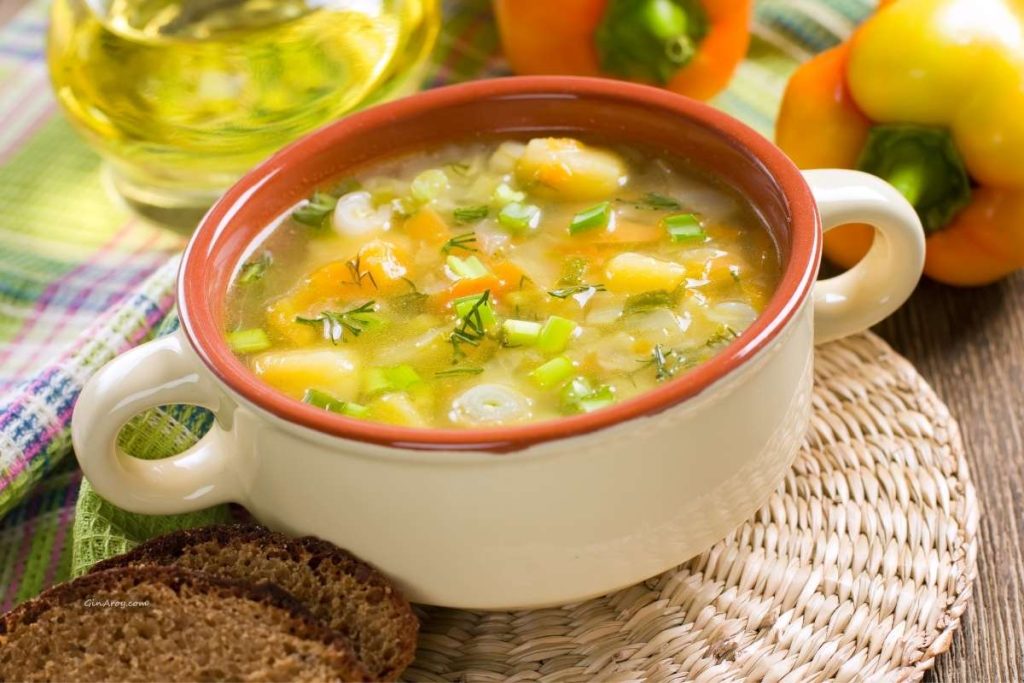
Common flavour elements include:
- Garlic
- Coriander root
- White pepper
- Lemongrass
- Galangal
- Kaffir lime leaves
- Soy sauce
- Mushroom seasoning
- Fresh lime
- Thai basil
- Spring onion
- Coriander leaves
The flavour may be mild, peppery, sour, herbal, or slightly spicy depending on the recipe.
Unlike coconut curries, clear Thai vegetable soup recipes usually allow the taste and texture of the vegetables to remain noticeable. The broth supports the ingredients rather than covering them with a thick sauce.
Essential Ingredients For Thai Vegetable Broth
A simple Thai-style vegetable broth can be prepared with ordinary ingredients.
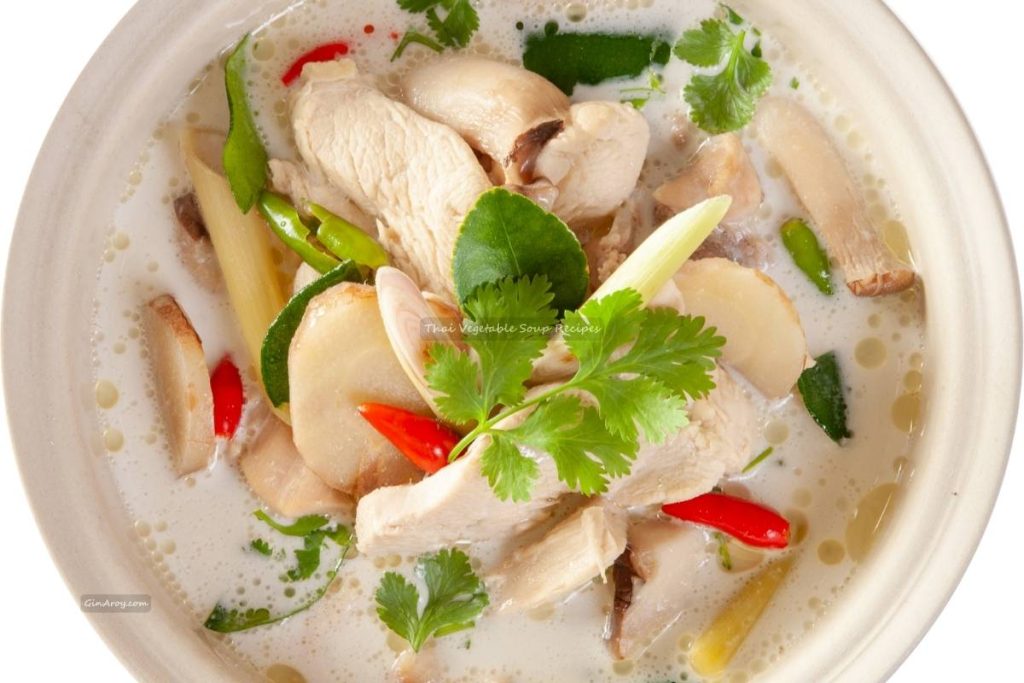
Useful options include:
- Water
- Onion
- Garlic
- Coriander roots or stems
- White pepper
- Daikon radish
- Carrot
- Mushroom stems
- Celery
- Lemongrass
- Galangal
- Kaffir lime leaves
- Soy sauce
- Salt
Not every broth needs all these ingredients.
For a mild family soup, garlic, coriander root, white pepper, onion, daikon, and mushroom stems create a gentle base.
For more aromatic Thai vegetable soup recipes, add bruised lemongrass, sliced galangal, and torn kaffir lime leaves.
How To Make Vegetable Broth Taste Thai
A plain vegetable stock can taste flat when it contains only carrots, onion, and water. Thai flavour can be created by adding aromatics and seasoning in stages.
A practical method is:
- Pound garlic, coriander root, and white pepper
- Fry the mixture gently in a small amount of oil
- Add water or unsalted vegetable stock
- Add onion, daikon, and mushroom stems
- Simmer until the broth becomes fragrant
- Season lightly with soy sauce
- Finish with spring onion, coriander, or lime
This base works for many Thai vegetable soup recipes.
The broth should taste savoury and aromatic without becoming excessively salty. Strong bottled sauces can quickly overpower delicate vegetables, so add them gradually.
Coriander Root, Garlic, And White Pepper
This combination is a familiar foundation in Thai cooking.
Coriander root provides a deeper aroma than coriander leaves. Garlic adds savoury flavour, while white pepper creates gentle warmth.
To prepare the mixture:
- Wash the coriander roots carefully
- Chop them into small pieces
- Add peeled garlic
- Add white pepper
- Pound everything into a rough paste
When coriander root is unavailable, use the lower coriander stems.
This aromatic paste is especially useful in clear Thai vegetable soup recipes because it gives the broth more character without making it spicy.
Lemongrass, Galangal, And Kaffir Lime Leaves
These herbs create a brighter and more citrus-like broth.
Lemongrass should be bruised before simmering. Galangal can be sliced, while kaffir lime leaves should be torn to release their aroma.
Large pieces are normally removed or moved aside while eating because they remain fibrous.
This combination works well with:
- Mushrooms
- Tomatoes
- Chinese cabbage
- Tofu
- Baby corn
- Bok choy
Use fewer aromatics for children who prefer very gentle flavours.
Vegetables Commonly Used In Thai Soups
Many vegetables can be used in clear Thai vegetable soup recipes.
Common choices include:
- Chinese cabbage
- Bok choy
- Morning glory
- Winter melon
- Daikon radish
- Carrots
- Mushrooms
- Tomatoes
- Baby corn
- Pumpkin
- Courgette
- Green beans
- Cabbage
- Cauliflower
- Broccoli
- Spring onion
Different vegetables require different cooking times. Firm roots should be added first, while leafy vegetables should be added near the end.
Chinese Cabbage
Chinese cabbage has soft leaves and pale crunchy stems. It becomes sweet and tender when simmered.
It works well with:
- Tofu
- Mushrooms
- Carrots
- Glass noodles
- White pepper
- Coriander
Chinese cabbage is useful in mild Thai vegetable soup recipes because its flavour is gentle and familiar to children.
Add the thicker stems before the leaves so everything finishes cooking at the same time.
Bok Choy
Bok choy adds green colour, tender leaves, and crisp stems.
It cooks quickly and should usually be added during the final minutes.
Small bok choy can be halved, while larger heads can be separated into leaves.
Bok choy pairs well with tofu, mushrooms, garlic, and light soy broth.
Avoid boiling it for too long because the leaves may become dull and the stems overly soft.
Winter Melon
Winter melon is commonly used in clear Asian soups. It has a mild flavour and becomes soft and slightly translucent when cooked.
It can be combined with:
- Tofu
- Mushrooms
- Carrots
- Coriander root
- White pepper
- Glass noodles
Winter melon absorbs broth well, making it suitable for simple Thai vegetable soup recipes.
Remove the thick skin and seeds before cutting it into bite-sized pieces.
Daikon Radish
Daikon radish adds mild sweetness to broth and becomes tender during simmering.
It is useful both as a broth ingredient and as a vegetable in the finished soup.
Daikon works particularly well with:
- Carrots
- Cabbage
- Tofu
- Mushrooms
- Coriander
- White pepper
Cut the pieces evenly so they cook at the same rate.
Morning Glory
Morning glory, also known as water spinach, is usually associated with stir-fries, but it can also be added to light soups.
The hollow stems remain slightly crisp, while the leaves wilt quickly.
Add morning glory close to the end of cooking.
It works best in broth containing garlic, chilli, lime, or fermented soybean seasoning, although mild versions can use only garlic and soy sauce.
Mushrooms
Mushrooms provide savoury depth and satisfying texture.
Suitable varieties include:
- Oyster mushrooms
- Straw mushrooms
- Shiitake mushrooms
- Shimeji mushrooms
- Wood ear mushrooms
- Button mushrooms
- Enoki mushrooms
Mushroom stems can also be simmered in the broth.
Using more than one mushroom variety can make vegetarian Thai vegetable soup recipes feel richer without adding coconut milk or meat.
Pumpkin
Pumpkin gives soup natural sweetness, colour, and a soft texture.
It works especially well in family soups because children may find it easier to enjoy than bitter or strongly flavoured vegetables.
Pumpkin can be combined with:
- Carrots
- Tofu
- Mushrooms
- Chinese cabbage
- Coriander
- Mild white pepper
Cut it into medium pieces so it softens without completely breaking apart.
Tomatoes
Tomatoes add colour, mild sourness, and natural sweetness.
They work well in aromatic broth containing lemongrass, galangal, and lime leaves.
Tomatoes should be added after firm root vegetables but before delicate leafy greens.
Too many tomatoes can dominate a clear soup, so use them as one ingredient rather than the entire base.
Vegetarian Protein Options
Vegetable soup can be light, but adding protein makes it more suitable as a complete family meal.
Useful vegetarian proteins include:
- Firm tofu
- Soft tofu
- Egg tofu
- Tempeh
- Edamame
- Chickpeas
- White beans
- Lentils
- Vegetarian meatballs
- Mushrooms
- Eggs for non-vegan households
Traditional Thai cooking does not use every one of these ingredients in the same way, but they can make home-style Thai vegetable soup recipes more filling and practical.
Firm Tofu
Firm tofu holds its shape well in broth.
It can be:
- Cut into cubes
- Pan-fried before adding
- Added directly to soup
- Marinated lightly
- Combined with mushrooms
Pan-frying creates a firmer texture, while adding it directly keeps the recipe lighter.
Add tofu after firm vegetables have started to soften.
Soft Tofu
Soft tofu creates a delicate texture and is suitable for mild soups.
Cut it carefully and add it near the end.
Avoid vigorous stirring because it can break apart.
Soft tofu works well with Chinese cabbage, mushrooms, spring onion, and a light coriander-root broth.
Tempeh
Tempeh has a firmer, nuttier flavour than tofu.
It can be cut into small cubes and lightly pan-fried before being added to soup.
Because its flavour is stronger, it works best in broth with garlic, lemongrass, lime, or mushrooms.
Tempeh may not be traditional in every Thai household soup, but it is a useful vegetarian protein for modern Thai vegetable soup recipes.
Beans And Lentils
Beans and lentils can make vegetable soup more substantial.
Suitable options include:
- Chickpeas
- White beans
- Mung beans
- Red lentils
- Green lentils
Use cooked beans to shorten the cooking time.
Lentils can thicken broth, so they are better in recipes where a slightly fuller texture is acceptable.
For a clear soup, use a small amount of whole beans rather than large quantities of split lentils.
Mild Thai Vegetable Soup For Families
A simple mild soup can use:
- Water or vegetable broth
- Garlic
- Coriander root
- White pepper
- Chinese cabbage
- Carrots
- Mushrooms
- Tofu
- Light soy sauce
- Spring onion
- Coriander leaves
This is one of the easiest Thai vegetable soup recipes for children because it contains no chilli and no strong coconut flavour.
White pepper should still be used carefully. Begin with a small pinch and allow adults to add more at the table.
How To Make Soup Mild For Children
To make vegetable soup family-friendly:
- Leave out fresh chillies
- Use less white pepper
- Keep lime optional
- Choose sweet vegetables
- Avoid bitter greens
- Use low-sodium broth
- Cut vegetables into small pieces
- Cook firm vegetables until tender
- Serve extra spice separately
Good vegetables for children include pumpkin, carrots, baby corn, Chinese cabbage, mushrooms, and courgette.
A mild bowl can later be adjusted for adults with chilli flakes, chilli oil, fresh lime, or extra pepper.
Clear Thai Vegetable And Tofu Soup
This simple recipe makes approximately four servings.
Ingredients
- 1 litre vegetable broth or water
- 2 coriander roots or several coriander stems
- 3 garlic cloves
- A small pinch of white pepper
- 1 carrot, sliced
- 1 cup daikon radish, sliced
- 1 cup mushrooms
- 2 cups Chinese cabbage
- 200 grams firm tofu
- 1 to 2 tablespoons light soy sauce
- Spring onion
- Coriander leaves
Method
Pound the coriander root, garlic, and white pepper into a rough paste.
Heat a small amount of oil in a pot and cook the paste gently until fragrant.
Add the broth, carrots, and daikon.
Simmer until the vegetables begin to soften.
Add mushrooms and tofu.
Add the cabbage stems, followed by the leaves.
Season with soy sauce and taste.
Finish with spring onion and coriander.
This is one of the most flexible Thai vegetable soup recipes because almost every vegetable can be replaced according to the season.
Aromatic Thai Mushroom Soup
This clear mushroom soup uses lemongrass, galangal, and kaffir lime leaves without turning into a general Tom Yum recipe.
Ingredients
- 1 litre vegetable broth
- 2 lemongrass stalks
- Several slices of galangal
- 3 kaffir lime leaves
- 3 cups mixed mushrooms
- 1 tomato
- 1 cup baby corn
- Light soy sauce
- Fresh lime
- Coriander
- Optional chilli served separately
Method
Bruise the lemongrass and tear the lime leaves.
Simmer the lemongrass, galangal, and lime leaves in the broth.
Add mushrooms, tomato, and baby corn.
Season lightly with soy sauce.
Turn off the heat before adding fresh lime.
Finish with coriander.
The result should remain vegetable-led, clear, and aromatic.
Winter Melon And Tofu Soup
Winter melon creates a soft and soothing soup.
Ingredients
- Vegetable broth
- Winter melon
- Carrot
- Shiitake mushrooms
- Firm tofu
- Garlic
- Coriander root
- White pepper
- Light soy sauce
- Spring onion
Simmer the winter melon and carrots until nearly tender.
Add mushrooms and tofu.
Season gently and finish with fresh herbs.
This is one of the best Thai vegetable soup recipes for people who prefer very mild flavours.
Pumpkin And Vegetable Clear Soup
Pumpkin can be used in clear broth without coconut milk.
Combine:
- Pumpkin
- Carrot
- Mushrooms
- Chinese cabbage
- Tofu
- Garlic
- Coriander root
- White pepper
- Light soy sauce
Add the pumpkin first because it needs more time to soften.
Avoid overcooking it until it disappears into the broth.
The natural sweetness makes this soup suitable for family meals.
Using Seasonal Vegetables
Thai vegetable soup does not require the exact same ingredients all year.
Seasonal substitutions may include:
- Pumpkin instead of winter melon
- Courgette instead of Thai squash
- Regular cabbage instead of Chinese cabbage
- Broccoli instead of bok choy
- Green beans instead of long beans
- Button mushrooms instead of straw mushrooms
- Carrots instead of baby corn
- Aubergine instead of Thai eggplant
The best Thai vegetable soup recipes are adaptable.
Choose vegetables with similar cooking times, texture, or flavour roles rather than expecting every substitute to taste identical.
How To Substitute Leafy Vegetables
Leafy vegetables cook quickly and can often replace one another.
Possible substitutions include:
- Chinese cabbage
- Bok choy
- Morning glory
- Kale
- Spinach
- Chard
- Regular cabbage
Strong greens such as kale may require more cooking and have a more noticeable flavour.
Spinach cooks very quickly and should be added just before serving.
How To Substitute Root Vegetables
Root vegetables give broth sweetness and body.
Possible options include:
- Daikon
- Carrots
- Turnips
- Potatoes
- Sweet potatoes
- Taro
Potatoes and sweet potatoes create a heavier soup than daikon.
Taro should be cooked thoroughly and handled carefully because raw taro can irritate the skin and mouth.
For a light broth, carrots and daikon remain the easiest choices.
Adding Noodles
Rice noodles or glass noodles can turn a vegetable soup into a more complete meal.
Useful choices include:
- Thin rice noodles
- Wide rice noodles
- Glass noodles
- Fresh rice noodles
Cook noodles separately when storing leftovers. Otherwise, they may absorb too much broth and become soft.
Add cooked noodles to individual bowls before ladling over the hot soup.
This method also lets family members choose different portion sizes.
Seasoning Without Fish Sauce
Vegetarian soup can be seasoned with:
- Light soy sauce
- Mushroom soy sauce
- Vegetarian seasoning sauce
- Mushroom powder
- Salt
- Fermented soybean paste
Check the label because vegetarian sauces can still contain significant sodium.
Use only one or two main salty ingredients rather than adding every sauce at once.
Aromatic herbs and fresh lime can make Thai vegetable soup recipes taste complete with less sodium.
How To Add Sourness
Fresh lime is the simplest way to add sourness.
It should be added after turning down or switching off the heat.
Other options include:
- Tamarind water
- Tomatoes
- Pickled lime in specialised recipes
- Mild sour fruit
For family soups, serve lime wedges separately. Children can enjoy a gentle broth while adults add more acidity to their bowls.
How To Add Heat
Heat can come from:
- Fresh bird’s eye chillies
- Dried chilli flakes
- Chilli oil
- White pepper
- Freshly ground black pepper
For family meals, do not add strong chilli to the entire pot.
Place extra chilli on the table so adults can adjust individual bowls.
This keeps mild Thai vegetable soup recipes suitable for everyone.
How To Avoid A Bland Vegetable Soup
A bland soup usually needs more aroma, salt, acidity, or savoury depth.
Before adding more salt, try:
- More coriander root
- More garlic
- Freshly torn lime leaves
- Mushroom broth
- A squeeze of lime
- Fresh coriander
- Spring onion
- A small amount of fermented soybean paste
Taste after each adjustment.
The broth should support the vegetables rather than become aggressively salty.
Common Beginner Mistakes
Adding Every Vegetable At Once
Firm vegetables need more time than leafy vegetables.
Using Too Much Soy Sauce
Soy sauce can quickly make the broth dark and salty.
Overcooking Leafy Greens
Add them near the end to preserve colour and texture.
Using Too Many Aromatic Herbs
Excessive lemongrass, galangal, or lime leaves can make the broth harsh.
Leaving Large Fibrous Pieces In Children’s Bowls
Remove thick lemongrass and galangal before serving young children.
Making Every Soup Spicy
Many Thai vegetable soups can be mild and aromatic.
Using Coconut Milk Automatically
Clear broth is the focus of these Thai vegetable soup recipes. Coconut milk is not necessary.
Allowing Noodles To Sit In The Broth
Noodles may absorb the liquid and become overly soft.
Forgetting Vegetarian Labels
Some sauces and stock powders contain fish or animal ingredients.
Serving Ideas For Family Meals
Serve vegetable soup with:
- Jasmine rice
- Brown rice
- Rice noodles
- Thai omelette for non-vegan meals
- Tofu
- Fresh cucumber
- Mild stir-fried vegetables
- Fresh fruit
A bowl of soup with rice and tofu can make a simple family dinner.
For children, serve the broth, rice, and vegetables separately if they prefer to control the texture.
Preparing Soup In Advance
Vegetable broth can be made ahead and refrigerated.
A practical method is:
- Prepare the broth
- Strain out spent aromatics
- Cool it promptly
- Store it in a covered container
- Add fresh vegetables when reheating
This prevents delicate vegetables from becoming overly soft.
Broth can also be frozen in family-sized portions.
Storing Leftover Vegetable Soup
Allow the soup to cool promptly before refrigerating it.
Transfer it to a clean covered container.
Store noodles, rice, and fresh garnishes separately when possible.
Leafy vegetables may soften during storage, but root vegetables, mushrooms, tofu, and broth usually keep their texture better.
Discard soup that develops an unusual smell, bubbling, slime, or other signs of spoilage.
Freezing Thai Vegetable Soup
Many clear Thai vegetable soup recipes freeze well.
Good ingredients for freezing include:
- Broth
- Carrots
- Daikon
- Pumpkin
- Mushrooms
- Firm tofu
- Winter melon
Ingredients that may become very soft include:
- Bok choy
- Chinese cabbage
- Courgette
- Glass noodles
- Rice noodles
For best results, freeze the broth and firm vegetables, then add fresh leafy greens after reheating.
Reheating Vegetable Soup
Reheat soup gently in a saucepan.
Bring it to a safe serving temperature while avoiding unnecessary long boiling.
Add a small amount of water or broth if it has thickened.
Fresh lime, coriander, spring onion, or Thai basil can be added after reheating to restore brightness.
Only reheat the portion needed rather than repeatedly warming the full batch.
Reheating Soup With Tofu
Firm tofu usually reheats well.
Soft tofu should be stirred carefully because it can break apart.
If the soup contains fried tofu, the exterior may lose some crispness during storage, but it will still absorb the broth.
Add a few fresh tofu cubes during reheating when a lighter texture is preferred.
A Simple Weekly Soup Plan
Families can prepare one vegetable broth and use it in several ways.
For example:
- Chinese cabbage and tofu soup
- Mushroom and lemongrass soup
- Winter melon and carrot soup
- Pumpkin and vegetable soup
- Bok choy and glass noodle soup
This approach makes Thai vegetable soup recipes practical for busy households while avoiding repetitive flavours.
Use different vegetables and finishing herbs each day.
👉 “Readers who enjoy simple vegetable soups may also try this beginner-friendly Tom Yum soup recipe for a more aromatic and flavorful Thai soup option.”
Conclusion
Easy Thai vegetable soup recipes can be light, aromatic, flexible, and suitable for family meals. They do not need coconut milk, meat stock, or large amounts of chilli to taste complete.
A good Thai vegetable broth can begin with coriander root, garlic, white pepper, onion, daikon, mushrooms, lemongrass, galangal, or kaffir lime leaves. Soy sauce, mushroom seasoning, fresh lime, and herbs can then provide balance.
Common vegetables include Chinese cabbage, bok choy, winter melon, daikon, carrots, mushrooms, tomatoes, pumpkin, baby corn, and morning glory. Firm tofu, soft tofu, tempeh, beans, mushrooms, and glass noodles can make the soup more filling.
For mild family meals, leave chilli out of the pot, reduce pepper, choose naturally sweet vegetables, and serve spicy condiments separately.
Seasonal substitutions are easy when vegetables with similar textures and cooking times are chosen. Broth can also be prepared in advance, refrigerated, or frozen for faster meals.
By keeping the focus on clear broth, fresh vegetables, vegetarian protein, and gentle Thai aromatics, Thai vegetable soup recipes can provide simple and comforting meals without overlapping with coconut soups or general lists of famous Thai soups.
FAQ
What Vegetables Are Commonly Used In Thai Vegetable Soup?
Common choices include Chinese cabbage, bok choy, winter melon, daikon, carrots, mushrooms, tomatoes, pumpkin, baby corn, morning glory, and green beans.
How Can I Make Vegetable Broth Taste Thai?
Use coriander root, garlic, white pepper, lemongrass, galangal, kaffir lime leaves, soy sauce, mushroom seasoning, lime, and fresh herbs.
Can Thai Vegetable Soup Be Mild?
Yes. Leave out chilli, use only a little white pepper, choose sweet vegetables, and serve spicy condiments separately.
What Vegetarian Protein Can I Add?
Firm tofu, soft tofu, tempeh, beans, lentils, mushrooms, edamame, and vegetarian meatballs are practical options.
Do Thai Vegetable Soups Need Coconut Milk?
No. Many vegetable-led Thai soups use clear broth. Coconut milk is not necessary and is intentionally avoided in these recipes.
Can I Use Seasonal Vegetables?
Yes. Replace vegetables with options that have similar textures and cooking times. Cabbage, courgette, carrots, pumpkin, broccoli, and local mushrooms are flexible choices.
Can I Add Noodles?
Yes. Rice noodles and glass noodles work well. Cook and store them separately to prevent them from absorbing too much broth.
How Can I Make The Soup Less Salty?
Use unsalted broth, measure soy sauce carefully, add more water or vegetables, and use herbs and lime to strengthen flavour without extra salt.
Can Thai Vegetable Soup Be Frozen?
Yes. Clear broth, carrots, daikon, pumpkin, mushrooms, and firm tofu generally freeze well. Leafy vegetables and noodles may become softer.
How Should Vegetable Soup Be Reheated?
Warm it gently in a saucepan until hot throughout. Add water if needed and finish with fresh lime, coriander, or spring onion.