
- Introduction
- Why Garlic Works So Well In Thai Stir Fries
- Choosing Fresh Garlic
- Crushed, Chopped, Or Sliced Garlic
- How To Fry Garlic Without Burning It
- Frying Garlic Before Or After The Protein
- A Simple Thai Garlic Sauce Base
- Balancing Garlic With Soy Sauce
- Balancing Garlic With Oyster Sauce
- Adding Fish Sauce Carefully
- Using Thai Seasoning Sauce
- Balancing Garlic With Chili
- Should Sugar Be Added?
- Adding Water Or Stock
- Best Vegetables For Thai Garlic Stir Fry
- Combining Vegetables With Different Cooking Times
- Garlic Chicken For A Quick Meal
- Garlic Pork With White Pepper
- Garlic Tofu For A Plant-Based Option
- Garlic Mushrooms As A Main Or Side Dish
- Garlic Prawns And Seafood
- Crispy Garlic As A Finishing Ingredient
- Fresh Herbs And Final Garnishes
- A Flexible Weeknight Cooking Method
- Quick Weeknight Combinations
- Serving Thai Garlic Stir Fry
- Common Mistakes To Avoid
- How To Adjust The Flavor
- Conclusion
- FAQ
- What Makes A Thai Garlic Stir Fry Different?
- Should Garlic Be Added First?
- Which Sauce Works Best With Garlic?
- How Much Garlic Should Be Used?
- Which Vegetables Work Best?
- How Can Garlic Stir Fry Be Made Spicy?
- Can Thai Garlic Stir Fry Be Vegetarian?
- How Can Burnt Garlic Be Avoided?
- Why Is Water Added To Stir Fry Sauce?
- What Should Be Served With Thai Garlic Stir Fry?
Introduction
Garlic plays a central role in everyday Thai cooking. It can provide sweetness, aroma, sharpness, nuttiness, and a lightly crisp texture depending on how it is prepared.
A good Thai garlic stir fry is therefore not simply a dish with extra chopped garlic. It is a style of flavoring built around the way garlic is crushed, fried, combined with sauces, and balanced with vegetables, protein, chili, and rice.
The same basic method can be used with chicken, pork, tofu, mushrooms, green beans, broccoli, cabbage, or mixed vegetables. What changes is the cooking time, sauce balance, and amount of moisture needed.
This makes Thai garlic stir fry useful for busy home cooks. Once the flavor structure is understood, it is possible to create many different meals without following a completely new recipe each time.
This guide explores how garlic is used in Thai stir fries, which vegetables work particularly well, how to combine garlic with soy sauce, oyster sauce, fish sauce, and chili, and how to build quick weeknight meals with balanced Thai-style flavor.
👉 “Readers exploring simple Thai home cooking may also discover these popular Thai drinks to try during a Bangkok visit for more local food and beverage inspiration.”
Why Garlic Works So Well In Thai Stir Fries
Fresh garlic has a strong raw aroma, but heat changes it quickly.
When garlic touches hot oil, it begins to lose some of its sharpness and develops a sweeter, rounder flavor. If it cooks a little longer, it becomes golden, nutty, and crisp. If it cooks too long, however, it can become bitter.
That short transition is important in a Thai garlic stir fry.
Garlic also works well with salty, savory, sweet, and spicy ingredients. It can connect soy sauce with vegetables, soften the intensity of fish sauce, deepen oyster sauce, and provide a fragrant base for fresh chili.
Common supporting flavors include:
- Light soy sauce
- Oyster sauce
- Fish sauce
- Thai seasoning sauce
- White pepper
- Fresh chili
- A small amount of sugar
- Spring onion
- Coriander
- Sesame oil in some home-style variations
Garlic should remain noticeable, but it should not overpower every other ingredient.
Choosing Fresh Garlic
Fresh, firm garlic usually gives the best aroma.
Look for bulbs that feel solid and dry. Avoid cloves that are very soft, wet, heavily sprouted, or covered with dark patches.
Both large and small cloves can work. Small Thai garlic may have a more concentrated aroma and is sometimes fried with part of its thin skin attached. Larger garlic cloves are easier to peel and chop, making them convenient for everyday cooking.
For a simple Thai garlic stir fry, two to five cloves may be enough for a small meal. Garlic lovers may use more, but the amount should still match the quantity of vegetables and sauce.
Crushed, Chopped, Or Sliced Garlic
The way garlic is cut affects both texture and flavor.
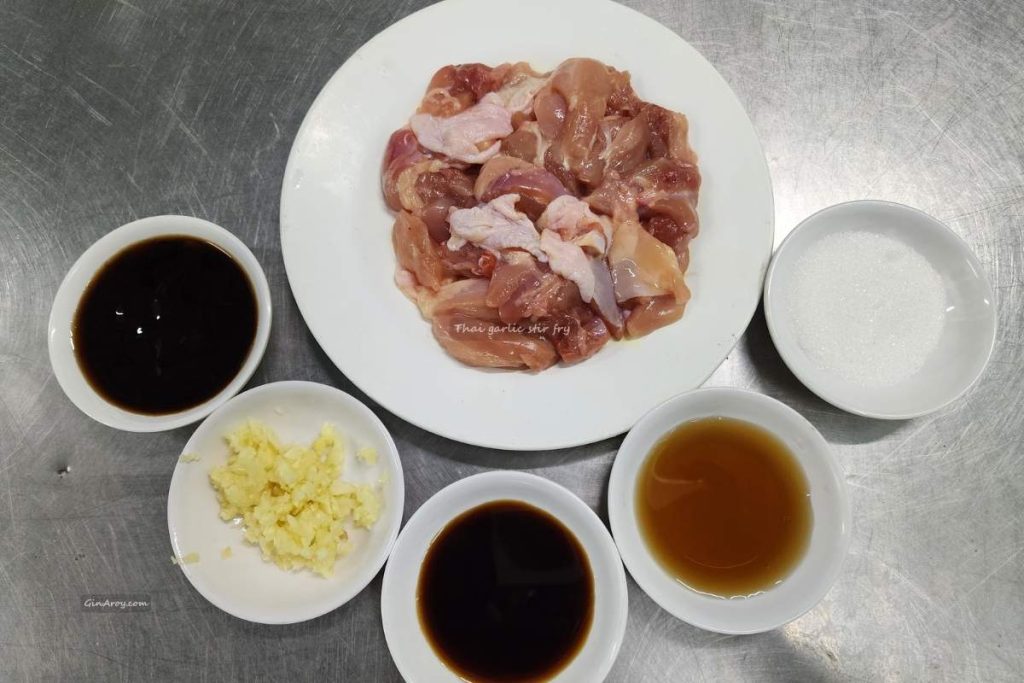
Crushed Garlic
Crushed garlic releases plenty of aroma and creates a strong garlic base. It is ideal when the garlic should blend closely with sauce and coat the other ingredients.
Finely Chopped Garlic
Finely chopped garlic cooks quickly and distributes evenly through a stir fry. It works well for small pieces of chicken, pork, tofu, mushrooms, and vegetables.
Roughly Chopped Garlic
Roughly chopped garlic creates small, noticeable pieces. Some become golden while others stay softer, giving the dish more texture.
Sliced Garlic
Thin slices can become crisp around the edges. Sliced garlic works particularly well as both a cooking ingredient and finishing garnish.
Different preparations can even be combined in one Thai garlic stir fry. Crushed garlic can build the base, while a small amount of fried sliced garlic can be scattered on top.
How To Fry Garlic Without Burning It
Garlic burns more quickly than many vegetables and proteins. For that reason, temperature control matters.
Heat the wok or frying pan first, then add the oil. Once the oil is hot but not smoking heavily, add the garlic.
Stir it continuously for a short time. When it becomes fragrant and begins to turn pale golden, add the next ingredient.
The exact timing depends on:
- How finely the garlic is cut
- How hot the pan is
- How much oil is used
- Whether fresh chili is added
- How much moisture enters the pan
Very finely chopped garlic may need only a few seconds before another ingredient is added.
If the garlic becomes dark brown before the vegetables or protein enter the pan, it may taste bitter.
A successful Thai garlic stir fry usually begins with fragrant garlic, not burnt garlic.
Frying Garlic Before Or After The Protein
There are two useful approaches.
Garlic First
Frying garlic first gives the oil a strong aroma. The protein or vegetables are added just as the garlic begins to turn golden.
This works well when:
- Cooking is fast
- Ingredients are cut into small pieces
- The pan is not excessively hot
- The cook can add the next ingredient immediately
Protein First, Garlic Later
Some home cooks begin with the protein, move it to the side, and then briefly fry the garlic in the open part of the pan.
This approach can reduce the risk of burning garlic when:
- Thick pieces of meat require more time
- The pan is extremely hot
- The protein releases moisture
- Several ingredients are being cooked in stages
Both methods can produce a flavorful Thai garlic stir fry. The better choice depends on the ingredients and heat level.
A Simple Thai Garlic Sauce Base
A basic garlic sauce does not require many ingredients.
For a flexible starting point, combine:
- Light soy sauce for saltiness
- Oyster sauce for savory depth
- A small amount of water
- A small pinch of sugar
- White pepper if desired
This creates a balanced coating for vegetables, tofu, chicken, pork, or mushrooms.
A simple small-batch starting ratio might be:
- Two parts oyster sauce
- One part light soy sauce
- One to two parts water
- A small pinch of sugar
This is not a strict formula. Oyster sauces vary in sweetness and saltiness, while soy sauces differ between brands.
Taste and adjust before adding more salt.
The goal is to let the garlic remain the main aroma while the sauce gives the Thai garlic stir fry enough savory depth to pair with rice.
Balancing Garlic With Soy Sauce
Light soy sauce provides saltiness and a clean savory taste. It works particularly well with vegetables, tofu, chicken, noodles, and mushrooms.
Too much soy sauce can make a stir fry dark, salty, and one-dimensional. Begin with a small amount and add more only if needed.
Garlic and soy sauce work best when another element provides balance, such as:
- A little oyster sauce
- A small pinch of sugar
- Vegetable moisture
- A spoonful of water
- Fresh chili
- Lime served separately
For a lighter Thai garlic stir fry, soy sauce may be the main seasoning, with only a small amount of oyster sauce or none at all.
Balancing Garlic With Oyster Sauce
Oyster sauce gives a stir fry body, gloss, mild sweetness, and a deep savory flavor.
It is especially suitable for:
- Chinese broccoli
- Broccoli
- Mushrooms
- Chicken
- Pork
- Tofu
- Cabbage
- Green beans
Because oyster sauce is thick, it often benefits from a small amount of water. This helps it spread evenly rather than forming salty patches.
Garlic can prevent oyster sauce from tasting too heavy by adding freshness and aroma.
A balanced Thai garlic stir fry should taste savory and fragrant rather than simply sweet and thick.
Vegetarian oyster-style sauces made from mushrooms can be used for plant-based meals.
Adding Fish Sauce Carefully
Fish sauce gives a distinctive salty depth and can make a stir fry taste more recognisably Thai.
However, it should be used carefully when soy sauce and oyster sauce are already present.
A few drops may be enough.
Fish sauce works well with:
- Chicken
- Pork
- Seafood
- Cabbage
- Long beans
- Morning glory
- Mixed vegetables
Add it near the side of the hot pan if you want some of its aroma to soften before it reaches the food.
For a mild Thai garlic stir fry, use fish sauce as a background seasoning rather than the dominant flavor.
Using Thai Seasoning Sauce
Thai seasoning sauce is another convenient way to add saltiness and savory depth.
It can be used in place of part of the soy sauce or combined with oyster sauce.
Because brands differ, begin with a small quantity. Some seasoning sauces are saltier or sweeter than others.
A simple combination may include:
- Oyster sauce
- Thai seasoning sauce
- Water
- Garlic
- White pepper
This works especially well with chicken, pork, tofu, and firm vegetables.
Balancing Garlic With Chili
Garlic and chili are natural partners in Thai cooking.
Fresh Thai chilies add direct heat and a bright aroma. Larger red chilies can add color and a milder flavor. Dried chili flakes produce a different type of heat and may be added near the end.
For a mild dish:
- Leave the chili whole
- Use a large mild red chili
- Remove some seeds
- Add chili only as a garnish
For a stronger dish:
- Crush fresh chilies with garlic
- Slice chilies thinly
- Fry chili briefly in the garlic oil
- Add dried chili flakes
When garlic and chili are crushed together, the flavor becomes more intense. This can create a bolder Thai garlic stir fry, but the chili should not hide the sweetness of the vegetables.
Should Sugar Be Added?
A small amount of sugar can soften salty sauces and balance bitter vegetables.
It should not make the dish noticeably sweet.
Sugar may be useful when cooking:
- Chinese broccoli
- Kale
- Cabbage
- Bitter greens
- Strong soy-based sauces
- Chili-heavy sauces
Start with only a pinch.
Many oyster sauces already contain sweetness, so additional sugar may not be necessary.
The best Thai garlic stir fry balance comes from tasting the full sauce rather than adding sugar automatically.
Adding Water Or Stock
A small splash of water can help sauce move through the pan and coat the ingredients.
It can also produce steam, which helps firm vegetables cook without requiring too much oil.
Water is useful when cooking:
- Broccoli
- Carrots
- Chinese broccoli stems
- Green beans
- Cauliflower
- Thick cabbage pieces
Add only a small amount. Too much water turns the dish into a soft, diluted mixture rather than a stir fry.
Light stock may be used instead, but plain water is usually enough because garlic and sauces already provide strong flavor.
Best Vegetables For Thai Garlic Stir Fry
Many vegetables work well with garlic, but the best choices usually have enough structure to remain appealing after quick cooking.
Chinese Broccoli
Chinese broccoli has firm stems and slightly bitter leaves. Garlic, oyster sauce, soy sauce, and a small pinch of sugar balance it well.
Cook the sliced stems before the leaves because they need more time.
Broccoli
Broccoli absorbs garlic sauce while keeping a pleasant texture. Small florets cook quickly and pair well with chicken, tofu, mushrooms, or prawns.
Green Beans
Green beans remain crisp and work well with garlic, chili, soy sauce, and a little fish sauce.
Cabbage
Cabbage becomes naturally sweet when stir-fried. It needs only garlic, light seasoning, and perhaps white pepper.
Mushrooms
Mushrooms absorb savory sauce and contribute their own umami flavor. They are useful for a meat-free Thai garlic stir fry.
Bell Peppers
Bell peppers provide sweetness, color, and crunch. Add them after firmer vegetables so they do not become too soft.
Baby Corn
Baby corn has a mild taste and firm texture. It combines easily with garlic sauce and mixed vegetables.
Carrots
Thinly sliced carrots add sweetness and color. Cut them finely enough to cook quickly.
Morning Glory
Morning glory cooks very quickly and is traditionally paired with garlic, chili, and savory sauces. It should be cooked over high heat for only a short time.
Combining Vegetables With Different Cooking Times
A common mistake is adding every vegetable at once.
Firm vegetables need more time than tender leaves.
A useful cooking order is:
- Carrots, broccoli stems, and green beans
- Broccoli florets, baby corn, and mushrooms
- Bell peppers and cabbage
- Leafy greens and spring onions
This order helps each ingredient maintain a suitable texture.
For an even Thai garlic stir fry, cut vegetables into pieces that cook at approximately the same speed.
Garlic Chicken For A Quick Meal
Chicken is one of the easiest proteins to pair with garlic sauce.
Thin slices of chicken breast or thigh cook quickly and absorb seasoning well.
A simple combination includes:
- Chopped garlic
- Chicken
- Oyster sauce
- Light soy sauce
- Water
- White pepper
- Spring onion
Chicken thigh usually remains juicier, while breast meat creates a leaner meal.
Vegetables such as broccoli, green beans, mushrooms, and bell peppers can be added to turn the dish into a complete weeknight meal.
Garlic Pork With White Pepper
Pork and garlic are a classic combination.
Thin slices or small pieces of pork can be seasoned with:
- Garlic
- Light soy sauce
- Oyster sauce
- White pepper
- A little sugar
- Coriander
White pepper gives warmth without the direct heat of fresh chili.
Serve the finished Thai garlic stir fry with jasmine rice, cucumber slices, and a fried egg for a satisfying meal.
Garlic Tofu For A Plant-Based Option
Firm tofu works well because it can develop a lightly golden surface before being coated in sauce.
For better texture:
- Press excess moisture from the tofu
- Cut it into even pieces
- Fry or sear it before adding the sauce
- Remove it temporarily if necessary
- Return it after the vegetables are nearly cooked
A plant-based sauce may combine:
- Light soy sauce
- Mushroom seasoning sauce
- Vegetarian oyster-style sauce
- Water
- Garlic
- Chili
Mushrooms, broccoli, baby corn, cabbage, and green beans all pair well with garlic tofu.
Garlic Mushrooms As A Main Or Side Dish
Mushrooms release water as they cook. Use high heat and avoid overcrowding the pan.
Suitable varieties include:
- Oyster mushrooms
- Shiitake mushrooms
- Button mushrooms
- Shimeji mushrooms
- King oyster mushrooms
Garlic, soy sauce, oyster-style sauce, and white pepper can create a rich dish without requiring meat.
For a stronger aroma, finish with crispy garlic or sliced spring onion.
A mushroom-based Thai garlic stir fry can be served as a side dish or combined with tofu for a complete meal.
Garlic Prawns And Seafood
Prawns cook quickly, so the garlic should be ready before they enter the pan.
Cook only until the prawns are firm and opaque. Overcooking can make them tough.
A simple sauce may include:
- Garlic
- Light soy sauce
- Oyster sauce
- A little fish sauce
- Water
- White pepper
- Fresh chili
Squid can also work but requires very brief cooking. Seafood should be handled carefully and cooked thoroughly without leaving it in the pan longer than necessary.
Crispy Garlic As A Finishing Ingredient
Crispy fried garlic can add texture and a stronger aroma.
To prepare it:
- Slice or chop garlic evenly
- Heat oil gently
- Stir continuously
- Remove the garlic when pale golden
- Let it drain on paper
The garlic continues darkening slightly after it leaves the oil, so remove it before it becomes deep brown.
The garlic-flavored oil can then be used for cooking.
Scatter crispy garlic over the finished Thai garlic stir fry just before serving. This creates both soft cooked garlic in the sauce and crisp garlic on top.
Fresh Herbs And Final Garnishes
Garlic stir fries do not always require many herbs, but a simple garnish can brighten the dish.
Useful finishing ingredients include:
- Spring onion
- Coriander
- Thai basil
- Sliced red chili
- White pepper
- Crispy garlic
- Cucumber served on the side
- Lime served separately
Thai basil changes the character of the dish and moves it closer to a basil-style stir fry. Use it only when that flavor is desired.
A Flexible Weeknight Cooking Method
A simple method can be adapted to many ingredients.
Prepare the sauce before heating the pan.
Cut all vegetables and protein into small, even pieces.
Heat the wok or frying pan.
Add oil and garlic.
When the garlic becomes fragrant, add the protein or firmest vegetable.
Stir-fry until nearly cooked.
Add the remaining vegetables in order of firmness.
Pour in the prepared sauce.
Toss quickly until everything is coated and cooked.
Taste and adjust with a little soy sauce, water, chili, or sugar.
Serve immediately with rice.
Following this structure makes Thai garlic stir fry practical even when the ingredients change from week to week.
Quick Weeknight Combinations
Rather than treating these as separate recipes, use them as flexible ingredient combinations.
Chicken, Broccoli, And Garlic
Use sliced chicken, broccoli, garlic, oyster sauce, soy sauce, water, and white pepper.
Tofu, Mushroom, And Green Bean
Use firm tofu, mixed mushrooms, green beans, garlic, vegetarian oyster-style sauce, and fresh chili.
Pork, Cabbage, And Carrot
Use sliced pork, cabbage, carrots, garlic, soy sauce, oyster sauce, and a small pinch of sugar.
Prawns, Baby Corn, And Bell Pepper
Use prawns, baby corn, bell pepper, garlic, light soy sauce, fish sauce, and sliced chili.
Mixed Vegetables And Crispy Garlic
Use broccoli, cabbage, mushrooms, carrots, baby corn, a light garlic sauce, and crispy garlic on top.
Each combination follows the same Thai garlic stir fry principles while producing a different meal.
Serving Thai Garlic Stir Fry
Jasmine rice is the most natural partner because it absorbs the savory garlic sauce.
Other serving options include:
- Brown rice
- Riceberry rice
- Rice noodles
- Egg noodles
- Cauliflower rice
- A fried egg
- Fresh cucumber
- Clear soup
- A simple omelette
The sauce should be flavorful enough to season the rice without becoming excessively salty.
Serve the dish immediately because vegetables and proteins continue softening after cooking.
Common Mistakes To Avoid
Burning The Garlic
Dark garlic can become bitter. Add the next ingredient as soon as the garlic becomes fragrant and pale golden.
Adding Too Much Sauce
Too much sauce can make the dish salty and watery. Begin with a small amount.
Overcrowding The Pan
An overcrowded pan traps steam and prevents proper stir-frying. Cook in batches when necessary.
Using Vegetables With Very Different Cooking Times
Add firm vegetables before soft vegetables and leafy greens.
Using Too Much Sugar
The dish should taste savory and garlicky, not sweet.
Cooking Everything Too Slowly
Stir frying works best with preparation completed before the pan is heated.
Serving It Too Late
A finished Thai garlic stir fry tastes best immediately, while the vegetables still have texture and the garlic aroma remains fresh.
How To Adjust The Flavor
After the dish is nearly cooked, taste a small amount.
If it needs more saltiness, add a few drops of soy sauce or fish sauce.
If it is too salty, add water and more vegetables.
If it tastes flat, add white pepper, fresh chili, or a little seasoning sauce.
If it is too strong, serve it with more rice or add unsalted vegetables.
If it feels too heavy, reduce oyster sauce in the next batch and use more water or light soy sauce.
Small adjustments help create a Thai garlic stir fry suited to personal taste.
👉 “Home cooks who enjoy simple garlic stir-fries may also explore these easy Thai vegetable soup ideas for another light and comforting meal option.”
Conclusion
A successful Thai garlic stir fry is built around technique and balance rather than one fixed ingredient list.
Fresh garlic may be crushed, chopped, or sliced depending on the desired aroma and texture. Fry it only until fragrant and lightly golden before adding other ingredients.
Light soy sauce provides clean saltiness, while oyster sauce contributes body, sweetness, and savory depth. Fish sauce and Thai seasoning sauce can add extra character, but they should be used carefully to avoid excessive saltiness.
Fresh chili creates a brighter and spicier Thai garlic stir fry, while white pepper adds gentle warmth. A small pinch of sugar may help balance salty sauces or bitter vegetables, but the finished dish should not taste noticeably sweet.
Good vegetables include Chinese broccoli, broccoli, green beans, cabbage, mushrooms, bell peppers, baby corn, carrots, and morning glory. Add them according to their cooking times so they remain colorful and pleasantly textured.
Chicken, pork, prawns, tofu, and mushrooms can all work with the same basic garlic flavor structure. This makes Thai garlic stir fry particularly useful for quick weeknight cooking.
Once the sauce balance and cooking order are understood, home cooks can create many different meals with ingredients already available in the kitchen.
FAQ
What Makes A Thai Garlic Stir Fry Different?
It uses fresh garlic as the main aromatic flavor and balances it with Thai-style savory sauces, vegetables, protein, chili, and rice.
Should Garlic Be Added First?
Garlic is often briefly fried first, but it may be added after partially cooking the protein when there is a high risk of burning it.
Which Sauce Works Best With Garlic?
Light soy sauce and oyster sauce form a useful base. Fish sauce or Thai seasoning sauce may be added in small amounts.
How Much Garlic Should Be Used?
Two to five cloves may be enough for a small meal, although the quantity can be adjusted according to taste and serving size.
Which Vegetables Work Best?
Broccoli, Chinese broccoli, green beans, cabbage, mushrooms, peppers, carrots, baby corn, and morning glory are all suitable.
How Can Garlic Stir Fry Be Made Spicy?
Crush or slice fresh Thai chilies and briefly fry them with the garlic. Dried chili flakes may also be added.
Can Thai Garlic Stir Fry Be Vegetarian?
Yes. Use tofu, mushrooms, mixed vegetables, soy sauce, and vegetarian oyster-style sauce.
How Can Burnt Garlic Be Avoided?
Use controlled heat, stir continuously, and add the next ingredient as soon as the garlic becomes fragrant and pale golden.
Why Is Water Added To Stir Fry Sauce?
A small amount of water helps thick sauces spread evenly and creates enough steam to cook firm vegetables.
What Should Be Served With Thai Garlic Stir Fry?
Jasmine rice is the most common choice, although brown rice, noodles, a fried egg, cucumber, or clear soup can also work.