



- Introduction
- A Gentle, Creamy Thai Comfort Food Loved at Home
- What Is Goong Neung Nom Sod?
- Cultural Background: Why This Dish Matters in Thai Cooking
- Ingredients Explained (And Why They Matter)
- Step-by-Step Cooking Instructions (Detailed)
- Flavor Profile & Texture
- Tips for Perfect Results
- Popular Variations
- How to Serve Goong Neung Nom Sod
- Nutrition Values (Approximate per Serving)
- Health Benefits of Goong Neung Nom Sod
- Storage & Reheating
- Why This Dish Represents Thai Home Cooking
- Conclusion
- Frequently Asked Questions (FAQ)
Introduction
Goong Neung Nom Sod (กุ้งนึ่งนมสด) is a traditional Thai home-style seafood dish made by gently steaming fresh shrimp in a lightly seasoned milk-based sauce. Unlike spicy or stir-fried Thai recipes, this dish focuses on soft textures, natural sweetness, and balanced flavors.
The combination of shrimp, milk, oyster sauce, and soy sauce creates a creamy yet mild sauce that enhances the shrimp without overpowering it. Steaming helps retain moisture and nutrients, making the dish both comforting and easy to digest. For this reason, Goong Neung Nom Sod is commonly prepared in Thai households and served as part of a shared family meal.
In this article, you’ll find a complete guide to Goong Neung Nom Sod, including its cultural background, detailed cooking instructions, helpful tips and variations, nutrition values, and health benefits, so you can prepare this comforting Thai dish with confidence.
A Gentle, Creamy Thai Comfort Food Loved at Home
Thai cuisine is famous for its bold flavors—spicy chilies, sour lime, and fragrant herbs. But hidden beneath those fiery dishes is another side of Thai cooking: soft, comforting, and soothing food meant to nourish the body and calm the mind.
One of the best examples of this gentler tradition is Goong Neung Nom Sod (กุ้งนึ่งนมสด) — steamed shrimp with milk.
This dish is not about heat or complexity. Instead, it focuses on fresh shrimp, gentle steaming, and a creamy, lightly sweet–savory sauce made with milk and simple seasonings. It is a dish many Thais associate with home cooking, family meals, and comfort after a long day.
👉 “Curious to explore more of Thailand’s seafood traditions? Take a deeper look at Thai Seafood Dishes From Coast To Plate and discover how coastal flavors shape Thai home cooking.”
In this article, you’ll discover:
- What Goong Neung Nom Sod really is
- Why it is popular in Thai home kitchens
- How to cook it perfectly every time
- Cultural background and serving traditions
- Nutrition values and health benefits
- Common questions and expert tips
What Is Goong Neung Nom Sod?
Goong (กุ้ง) means shrimp
Neung (นึ่ง) means steamed
Nom Sod (นมสด) means fresh milk
So, Goong Neung Nom Sod literally translates to “steamed shrimp with milk.”
The dish consists of:
- Fresh shrimp (often left whole with shell on)
- Evaporated milk or coconut milk
- A mild seasoning of oyster sauce, soy sauce, sugar, and sometimes condensed milk
- Steaming instead of frying or boiling
The result is a silky, creamy sauce that coats the shrimp while keeping the meat tender and juicy.
Unlike heavily spiced Thai seafood dishes, this one is mild, balanced, and family-friendly, making it popular among:
- Children
- Elderly family members
- Anyone who prefers gentle flavors
Cultural Background: Why This Dish Matters in Thai Cooking
A Home-Style Dish, Not Street Food
Goong Neung Nom Sod is rarely sold at street stalls. Instead, it is commonly cooked:
- At home
- In small local restaurants
- In seafood eateries focused on comfort dishes
This is because steaming requires patience and control—qualities associated with home cooking rather than fast street food.
Milk in Thai Cuisine: A Modern Influence
Traditionally, Thai cooking relied more on coconut milk than dairy milk. The use of evaporated milk became popular in the mid-20th century, influenced by:
- Chinese-Thai cooking
- Western pantry ingredients
- Restaurant adaptations for richer textures
Today, many Thai households freely choose between evaporated milk or coconut milk, depending on taste and availability.
Comfort Food in Thai Culture
In Thailand, food is closely connected to emotional well-being. Mild dishes like this are often prepared when:
- Someone is feeling tired or unwell
- Children are eating together with adults
- A family wants a calm, nourishing meal
Goong Neung Nom Sod represents care, warmth, and simplicity.
Ingredients Explained (And Why They Matter)
1. Fresh Shrimp (Goong)
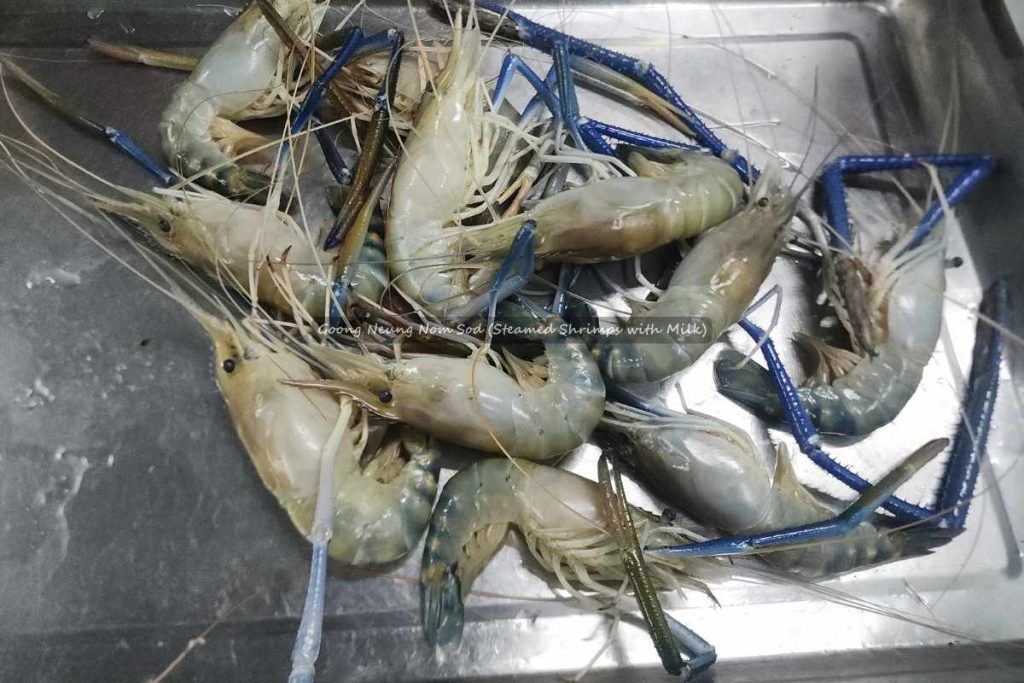
Freshness is crucial. Good shrimp should:
- Smell clean, not fishy
- Have firm flesh
- Show a translucent gray or light blue color when raw
Leaving the shell on helps:
- Protect the meat during steaming
- Add natural sweetness
- Prevent overcooking
2. Milk: Evaporated or Coconut
- Evaporated milk: Creamy, neutral, smooth
- Coconut milk: Richer aroma, more traditional Thai flavor
Both work beautifully. Evaporated milk gives a lighter feel, while coconut milk adds tropical depth.
3. Condensed Milk & Sugar
Used sparingly to:
- Round out the saltiness
- Create a soft sweetness
- Balance umami flavors
This dish should never be overly sweet.
4. Oyster Sauce & Soy Sauce
These provide:
- Umami depth
- Gentle saltiness
- A savory backbone without overpowering the shrimp
Step-by-Step Cooking Instructions (Detailed)
Step 1: Prepare the Shrimp
- Rinse shrimp gently under cold water
- Trim long whiskers
- Remove sharp rostrum tip if desired
- Keep shells on for maximum flavor
Step 2: Mix the Sauce
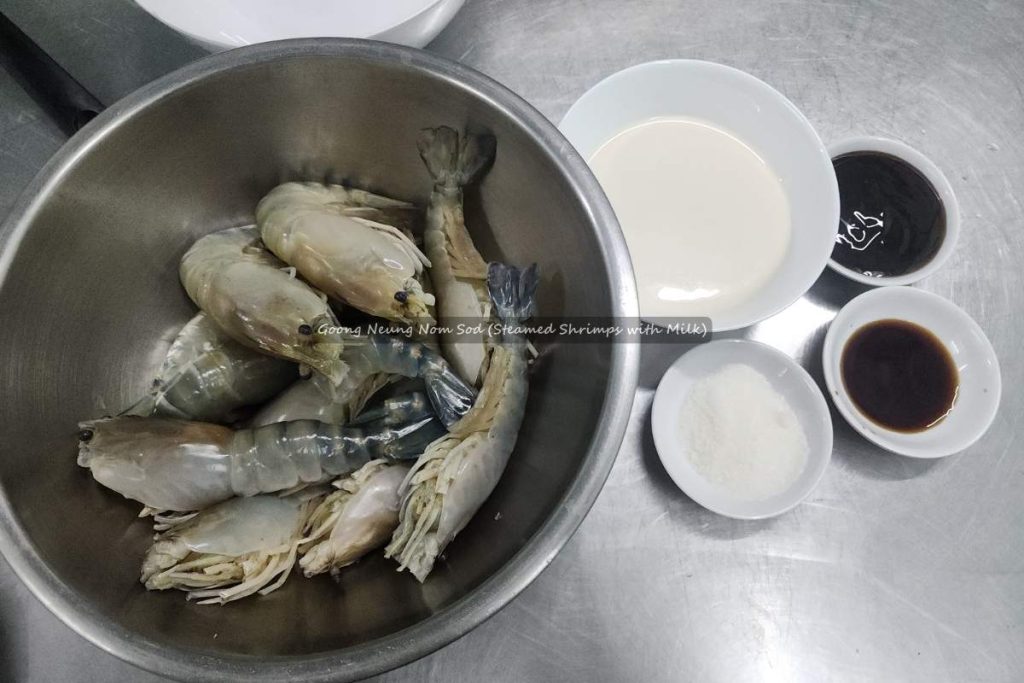
In a bowl, combine:
- Milk (evaporated or coconut)
- Oyster sauce
- Soy sauce
- Sugar
- Condensed milk (optional)
Taste and adjust. The flavor should be mild, creamy, and lightly savory.
Step 3: Arrange the Shrimp
- Lay shrimp in a single layer on a heatproof plate
- Pour sauce evenly over shrimp
Step 4: Steam Gently
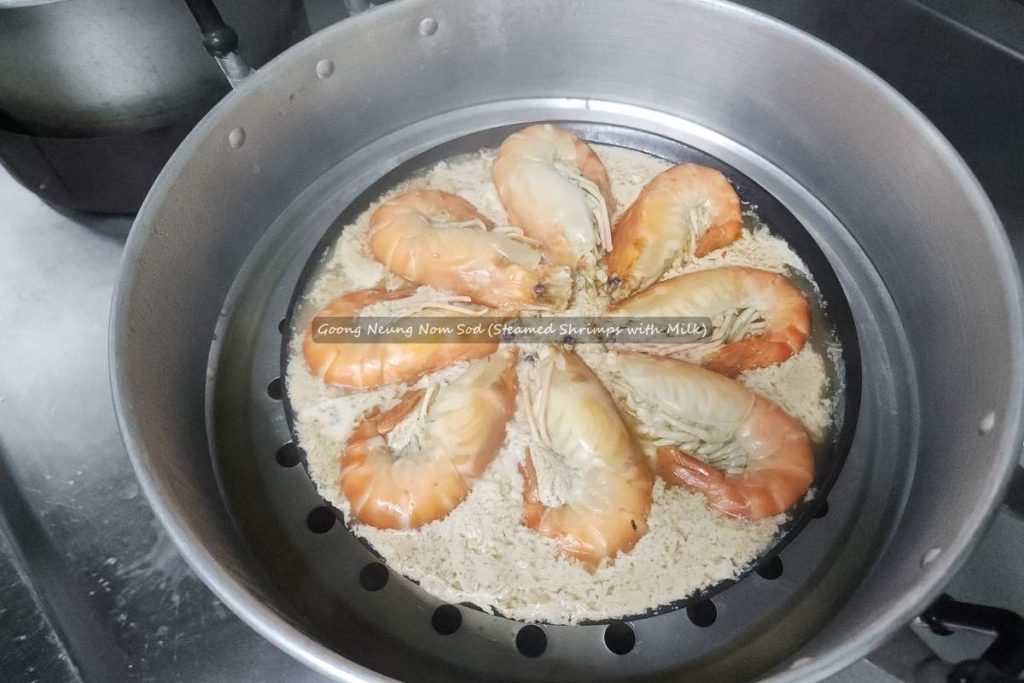
- Steam over medium heat
- Time: 8–10 minutes depending on shrimp size
- Avoid overcooking — shrimp should be opaque and springy
Step 5: Serve Immediately
Serve hot with jasmine rice to soak up the creamy sauce.
Flavor Profile & Texture
Goong Neung Nom Sod is defined by:
- Tender shrimp with natural sweetness
- Silky, creamy sauce
- Balanced umami without spice
It is soothing rather than exciting — a dish meant to be enjoyed slowly.
Tips for Perfect Results
- Do not steam too long — shrimp turn rubbery
- Taste sauce before steaming
- Use fresh shrimp, not frozen if possible
- Steam gently, not aggressively
Popular Variations
Garlic Version
Add minced garlic for a deeper aroma.
Ginger Version
Thinly sliced ginger adds warmth and digestive benefits.
Spicy Option
Top with sliced fresh chili or chili oil after steaming.
Low-Sugar Version
Reduce or skip condensed milk for a lighter dish.
How to Serve Goong Neung Nom Sod
Traditionally served with:
- Steamed jasmine rice
- Clear soup on the side
- Light vegetable stir-fry
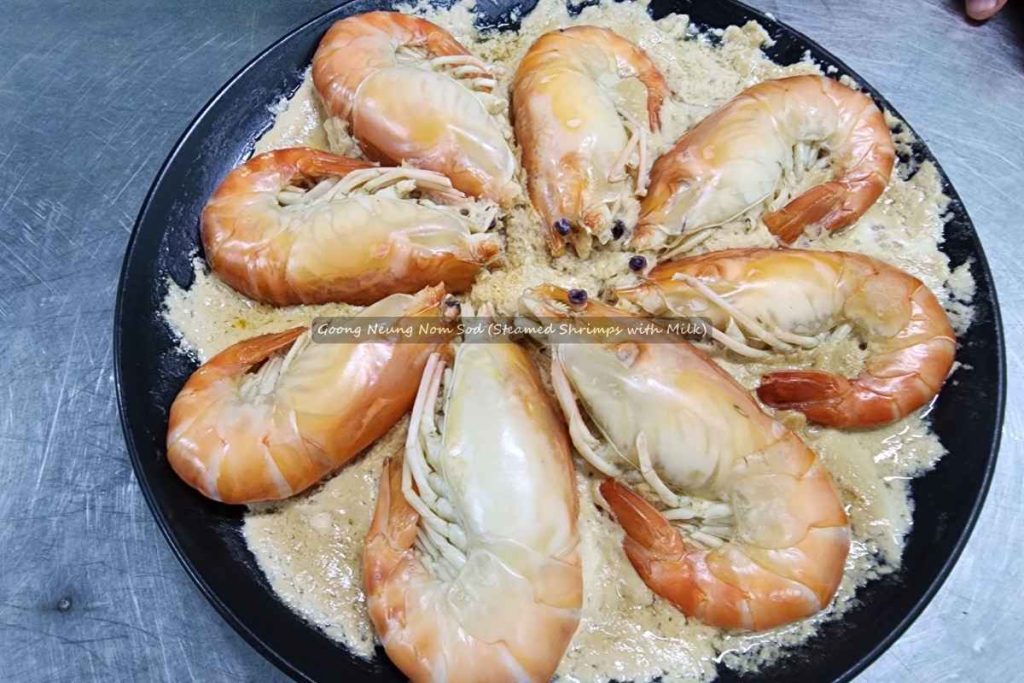
It is often placed in the center of the table and shared.
Nutrition Values (Approximate per Serving)
(Based on evaporated milk version, 2 servings)
- Calories: 320–360 kcal
- Protein: 28–32 g
- Fat: 18–22 g
- Carbohydrates: 8–12 g
- Cholesterol: Moderate
- Sodium: Moderate
Health Benefits of Goong Neung Nom Sod
1. High-Quality Protein
Shrimp provides lean protein essential for:
- Muscle repair
- Immune function
- Satiety
2. Rich in Minerals
Shrimp contains:
- Selenium (antioxidant)
- Zinc (immune support)
- Iodine (thyroid health)
3. Gentle on Digestion
Steaming and mild seasoning make this dish:
- Easy to digest
- Suitable for sensitive stomachs
4. Calcium & Vitamins (from Milk)
Milk adds:
- Calcium for bone health
- Vitamin B12
- Riboflavin
5. Lower Oil Content
Unlike fried seafood, this dish uses no oil, making it lighter and heart-friendlier.
Storage & Reheating
- Store in airtight container (up to 24 hours)
- Reheat gently by steaming or low heat
- Avoid microwave overheating
Best enjoyed fresh.
👉 “Looking for another comforting Thai vegetable dish? Don’t miss our guide to Pad Fak Tong (Thai Stir Fried Pumpkin), a simple home-style recipe loved across Thailand.”
Why This Dish Represents Thai Home Cooking
Goong Neung Nom Sod reflects a side of Thai cuisine that many visitors never see:
- Gentle
- Caring
- Nourishing
It is food cooked not to impress, but to comfort.
Conclusion
Goong Neung Nom Sod shows how Thai cuisine can be gentle without being bland. Through careful steaming and a softly seasoned sauce, the shrimp remain tender while the flavors stay balanced and soothing.
This dish is best enjoyed fresh, served with warm jasmine rice, and shared in a relaxed setting. It doesn’t aim to impress with spice or complexity, but instead offers comfort, nourishment, and simplicity—qualities that define much of Thai home-style cooking.
Whether you prepare it as a quick family meal or as a light seafood dish for guests, Goong Neung Nom Sod is a reminder that some of the most satisfying Thai recipes are also the quietest.
Frequently Asked Questions (FAQ)
Is Goong Neung Nom Sod sweet?
It is mildly sweet, balanced with savory flavors.
Can I use coconut milk?
Yes, it is very popular and more traditional.
Is this dish spicy?
No, naturally mild.
Can children eat this?
Yes, it is child-friendly.
Can I remove the shells?
Yes, but shells add more flavor during steaming.